Opinion
Adani's Bagheera Missile Trial at Pokhran: What It Means for India's Defence Industry
Adani Defence & Aerospace's successful demonstration of its Bagheera AT1 anti-tank guided missile system at Rajasthan's Pokhran range highlights the growing role of private companies in India's defence manufacturing sector. The article examines the missile's capabilities, India's record defence production of ₹1.78 lakh crore in FY 2025–26, and defence exports reaching ₹38,424 crore. It also explores the potential for indigenous defence technology to generate investment, strengthen domestic supply chains, create opportunities for MSMEs and expand India's presence in global defence markets.
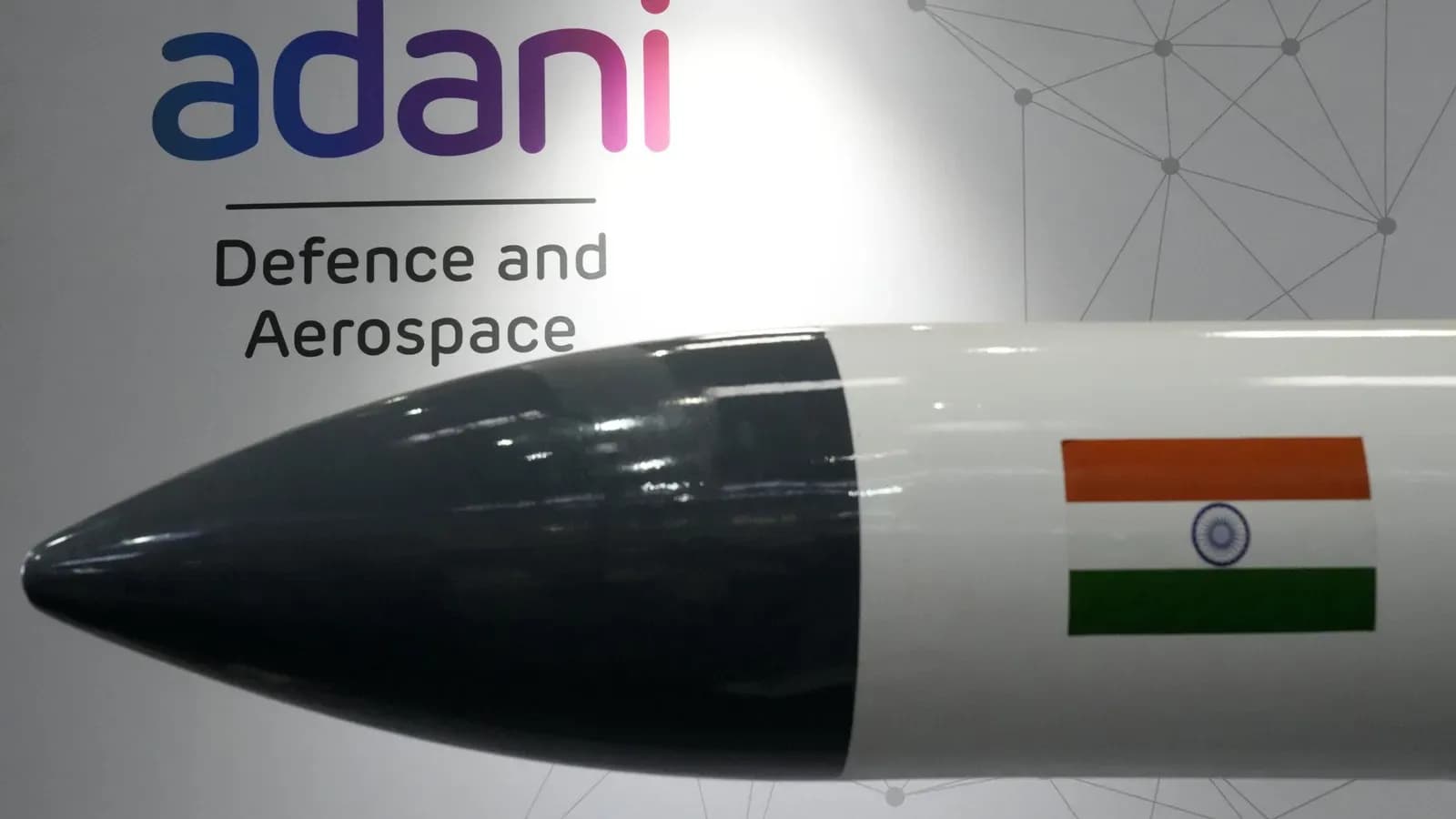
India's private defence manufacturing sector has taken another step forward with Adani Defence & Aerospace's successful demonstration of its Bagheera AT1 anti-tank guided missile (ATGM) system at the Pokhran Field Firing Ranges in Rajasthan. The demonstration, conducted on November 20, 2026, highlights the growing role of private companies in developing advanced military equipment and presents a wider opportunity for India's domestic defence industry.
The development is significant not only from a military perspective but also from an economic standpoint. As India seeks to reduce its dependence on imported defence equipment, indigenous weapons development could create opportunities across manufacturing, engineering, electronics, component production and defence exports.
Bagheera AT1: What Was Demonstrated at Pokhran?
According to Adani Defence's announcement, four Bagheera AT1 missiles were successfully fired during the demonstration. The trials showcased day and night engagements, tandem firing of two missiles against an armoured target and an engagement against an aerial target at an extended range.
The vehicle-mounted system has a stated anti-tank engagement range of up to 8 kilometres. It uses laser beam-riding guidance, which the company says offers greater resistance to electronic jamming than systems relying on conventional radio-frequency links.
The complete platform combines the missile, an automated launcher, day and night sighting equipment and an Adani-designed 4×4 high-mobility armoured vehicle. The company stated that the system underwent approximately 18 months of design and development to adapt it to Indian terrain, climatic conditions and operational requirements.
The demonstration was conducted under the No Cost No Commitment (NCNC) framework and witnessed by representatives of the Indian Army, Department of Military Affairs and Ministry of Defence.
Importantly, a successful demonstration does not amount to a confirmed procurement order or formal induction into the Indian Army. The system will be available for further evaluation by the Armed Forces.
India's Defence Manufacturing Sector: The Economic Opportunity
The Pokhran demonstration comes at a time when India's defence manufacturing industry is recording substantial growth.
According to the Ministry of Defence, India's total defence production reached a record ₹1.78 lakh crore in FY 2025–26, registering a 15.6% increase over ₹1.54 lakh crore in the previous financial year.
The private sector contributed approximately ₹42,000 crore, accounting for 24% of total defence production. This was higher than its 22% contribution in FY 2024–25, indicating an expanding role for private manufacturers in an industry traditionally dominated by public-sector enterprises.
The government's broader ambition is to achieve ₹3 lakh crore in annual defence production by 2029. Achieving this target will require greater participation from private manufacturers, investment in research and development, and stronger domestic supply chains.
For companies such as Adani Defence, developing complete weapon systems rather than limiting operations to individual components represents an opportunity to participate in higher-value segments of the defence industry.
Defence Exports: Can Indigenous Technology Create Global Markets?
The economic significance of domestic defence manufacturing extends beyond meeting the requirements of India's armed forces. It also creates the possibility of developing export-oriented businesses.
India's defence exports reached a record ₹38,424 crore in FY 2025–26, marking a 62.66% increase over ₹23,622 crore in FY 2024–25, according to the Ministry of Defence.
The private sector contributed ₹17,353 crore, or 45.16% of total defence exports, while defence public sector undertakings accounted for the remaining ₹21,071 crore.
These figures reflect the increasing participation of private manufacturers in international defence supply chains. If systems such as Bagheera AT1 progress through evaluation, production and the necessary export clearances, they could potentially contribute to India's defence export portfolio. However, no export contract for Bagheera AT1 has been announced.
For domestic manufacturers, export opportunities can help expand production volumes, improve economies of scale and support long-term investment in technology and manufacturing infrastructure.
Opportunities for MSMEs and the Domestic Supply Chain
The development of an advanced missile platform involves more than the final assembly of the weapon. It requires a network of specialised suppliers involved in precision engineering, electronic components, sensors, thermal imaging, communication systems, vehicle manufacturing and testing.
This creates potential opportunities for India's micro, small and medium enterprises (MSMEs), particularly those capable of meeting stringent defence quality and reliability standards.
Greater domestic sourcing can also strengthen industrial capabilities, develop specialised technical skills and reduce dependence on imported components. However, the extent of these benefits will depend on the actual production scale, procurement orders and the proportion of locally manufactured components.
For the wider economy, a stronger defence manufacturing ecosystem can encourage investment in advanced engineering and technologies that may also find applications in civilian industries.
From Successful Trials to Commercial Production
The next major test for Bagheera AT1 will be its evaluation by the Armed Forces and its ability to meet operational, technical and procurement requirements.
For India's private defence industry, the larger challenge is converting technological achievements into sustainable commercial production. This requires consistent government procurement, predictable policies, access to finance, research investment and a reliable domestic supplier network.
Adani's Pokhran demonstration represents a noteworthy development in India's expanding private defence manufacturing landscape. Its long-term economic significance, however, will depend on whether the platform progresses from successful trials to procurement, manufacturing and potential exports.
As India pursues its defence production and export ambitions, the growth of companies developing indigenous military technologies could become an important contributor to industrial investment, technological innovation and high-skilled employment.
