Opinion
Asian Markets Trade Mixed as Anthropic's Record IPO and Fed Rate Signals Shape Investor Sentiment
Asian financial markets recorded mixed movements on 19 November 2026 as investors assessed Anthropic's record-breaking $81 billion IPO and expectations of further US Federal Reserve interest rate increases. Anthropic priced its shares at $83, above the initially marketed range, supporting US equity-index futures, with Nasdaq 100 futures rising 0.9 per cent and S&P 500 futures gaining 0.5 per cent. However, Asian markets remained under pressure as Australian shares declined more than 1 per cent, copper prices fell 5.7 per cent and gold dropped over 3 per cent in the previous session. Meanwhile, minutes from the Federal Reserve's October meeting indicated the possibility of further rate increases to control inflation. These developments highlight the competing influence of AI-sector investment, commodity-market weakness and monetary policy on global investor sentiment.
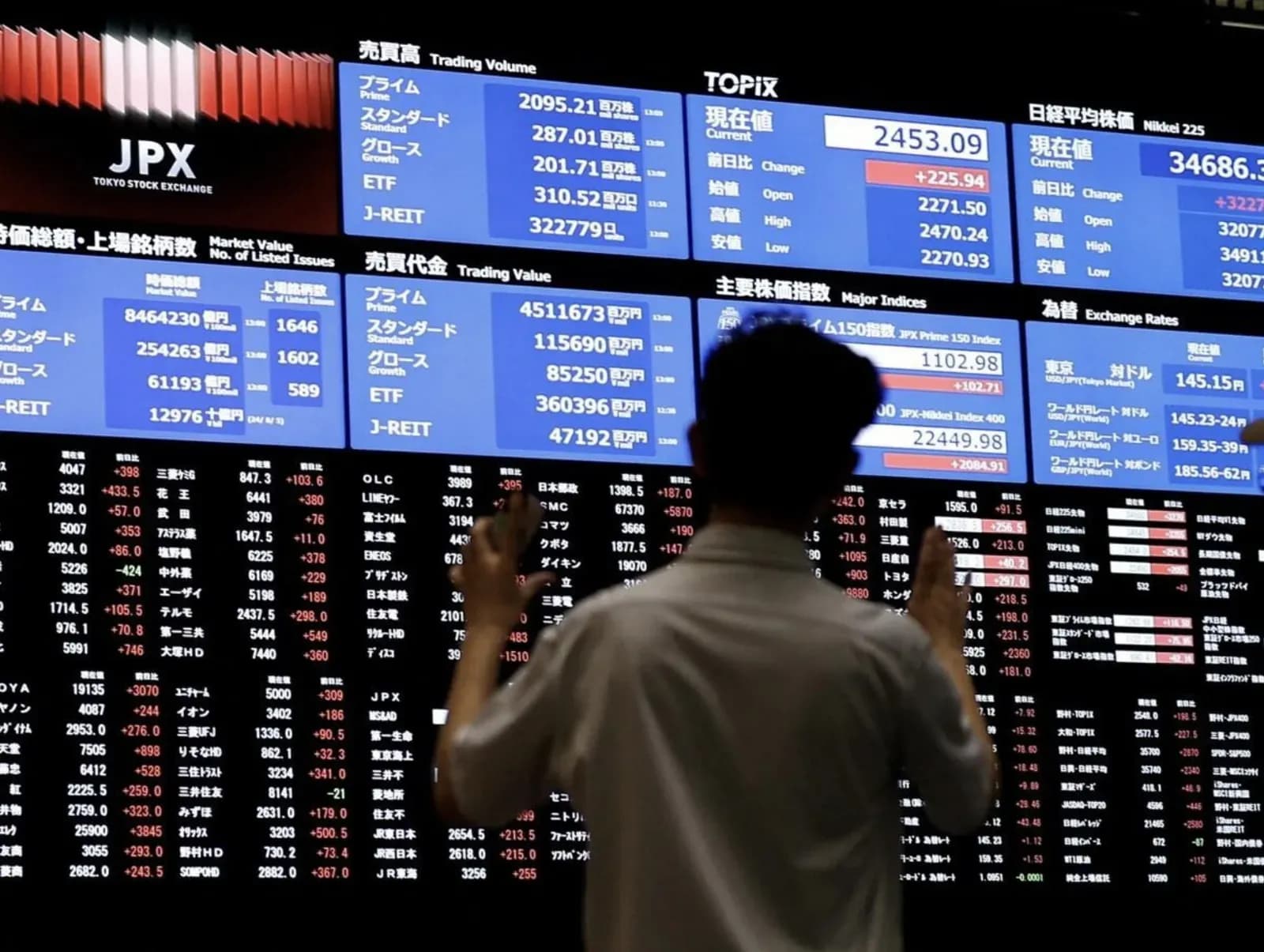
Asian financial markets recorded mixed movements on Thursday, 19 November 2026, as investors assessed developments surrounding the record-breaking initial public offering (IPO) of artificial intelligence company Anthropic and growing expectations of further interest rate increases by the US Federal Reserve. While US equity-index futures advanced following Anthropic's IPO pricing above its expected range, several Asian markets remained under pressure amid declining commodity prices and concerns about the outlook for global economic growth.
The contrasting movements reflected the uncertainty prevailing in international financial markets, where optimism surrounding artificial intelligence investments was being weighed against monetary policy concerns and weakening commodity prices.
Anthropic's record-breaking IPO lifts US market futures
One of the major developments influencing global investor sentiment was the IPO pricing announced by Anthropic, the US-based artificial intelligence company behind the Claude chatbot.
The company priced its IPO at $83 per share, above its previously marketed price range of $70–$78. The offering was valued at approximately $81 billion, making it the largest initial public offering on record. The listing represents a significant milestone for the artificial intelligence industry and provides an important test of investor appetite for advanced AI companies entering public markets.
Following the announcement, US equity-index futures moved higher. Contracts linked to the Nasdaq 100 Index rose 0.9 per cent, while S&P 500 Index futures gained 0.5 per cent. Investors viewed the IPO as an indicator of continued institutional interest in the technology sector, particularly in companies developing advanced AI models.
However, the successful pricing of the IPO does not necessarily guarantee strong performance once shares begin trading. Investors remain concerned about the substantial costs of developing AI infrastructure, the sustainability of technology-sector valuations and the ability of companies to convert growing AI adoption into long-term profitability.
Asian markets show mixed performance amid commodity weakness
Despite the positive movement in US futures, Asian equity markets presented a mixed picture during early trading on Thursday. Japan's Nikkei 225 remained relatively unchanged, while Australian shares declined by more than 1 per cent as commodity prices weakened.
The decline in commodities added pressure to market sentiment. Copper prices fell 5.7 per cent on the London Metal Exchange (LME) on Wednesday, reaching their lowest level since April. Tin prices also declined by approximately 5 per cent in London. Both metals are important industrial inputs, including for sectors associated with artificial intelligence infrastructure and electronics manufacturing.
Gold prices also experienced a significant decline, falling more than 3 per cent in the previous trading session to their lowest level in over a year. The movement reflected changing investor expectations following signals from US Federal Reserve officials regarding the possibility of additional interest rate increases.
The weakness in commodity markets highlighted concerns about investment positioning, demand expectations and the broader economic outlook.
Federal Reserve signals possibility of further interest rate increases
Monetary policy developments in the United States remained another major factor influencing international markets.
Minutes from the Federal Reserve's October meeting indicated that nearly all participating officials believed interest rates might need to rise further in the coming months to bring inflation towards the central bank's 2 per cent target.
Two policymakers also suggested that an increase of more than 25 basis points could be justified at the December meeting if incoming inflation data remained unfavourable.
Additional comments from Federal Reserve officials reinforced expectations of a potentially tighter monetary policy. San Francisco Federal Reserve President Mary Daly supported a measured approach to further rate increases, while Governor Michael Barr indicated that higher borrowing costs could be appropriate.
Expectations of higher US interest rates can influence global investment flows by making dollar-denominated assets more attractive and increasing borrowing costs. Such developments can also affect equity valuations, commodity prices and emerging-market currencies.
Consequently, investors are closely monitoring US inflation indicators and upcoming Federal Reserve decisions to assess the direction of global financial markets.
Implications for global financial markets
The developments surrounding Anthropic's IPO, commodity prices and US monetary policy demonstrate the competing forces shaping international investment sentiment.
While the successful pricing of Anthropic's offering indicates continued investor interest in artificial intelligence, concerns about technology-sector valuations and infrastructure expenditure remain significant.
At the same time, expectations of tighter US monetary policy could create additional pressure on global equities and emerging markets. Higher interest rates generally increase the cost of borrowing and can influence investment decisions across sectors.
For Asian economies, which are closely connected to global trade, manufacturing and commodity supply chains, fluctuations in metal prices and changes in US monetary policy may have broader implications for market performance.
The mixed performance of Asian markets on 19 November reflects the uncertainty surrounding the global economic and financial outlook. Anthropic's record-breaking IPO provided a positive signal for the technology sector and supported US equity-index futures. However, declining commodity prices and expectations of further US Federal Reserve rate increases limited broader investor optimism.
Going forward, market participants will closely monitor Anthropic's stock-market debut, upcoming US inflation data and the Federal Reserve's December policy decision. The interaction between technological investment opportunities, commodity-market trends and monetary policy is likely to remain an important determinant of global market sentiment.