Opinion
SatSure Raises ₹60 Crore: How India's Space-Tech Startups Are Turning Satellite Data into Business Opportunities
Bengaluru-based space-tech startup SatSure has raised ₹60 crore (approximately $7 million) from the government-backed Antariksh Venture Capital Fund as the first close of its ₹200 crore Series B funding round. The investment highlights growing institutional interest in India's commercial space sector, particularly in satellite imagery, artificial intelligence and geospatial intelligence. SatSure's technology has applications across agriculture, banking, insurance and infrastructure, demonstrating how satellite-based data can improve business decisions and economic efficiency. The company plans to expand its Earth-observation capabilities, develop optical satellite payloads and strengthen international operations. The development reflects India's broader ambition to expand its space economy from approximately $8.4 billion in 2023 to a projected $44 billion by 2033.
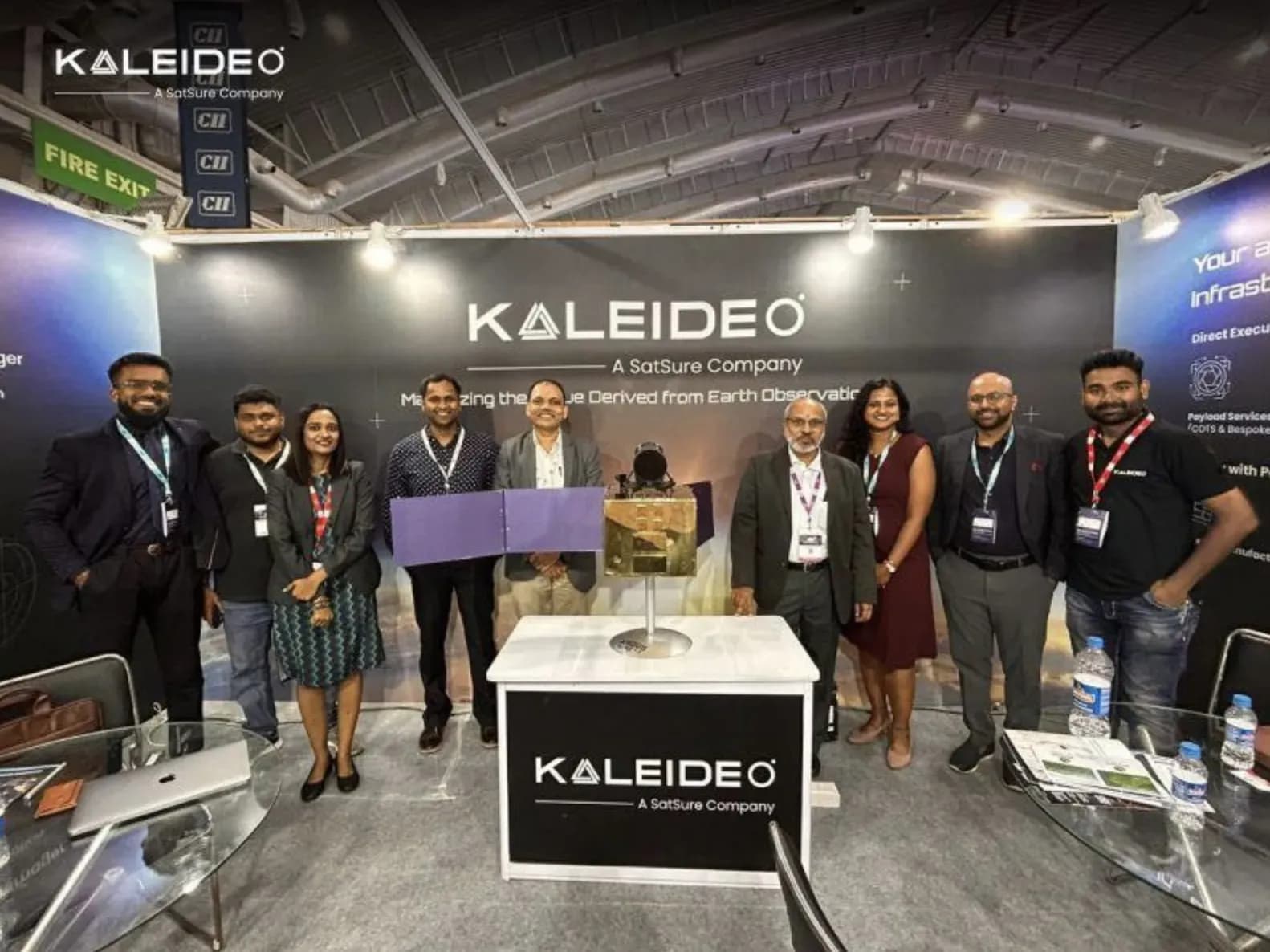
India's space economy is gradually moving beyond satellite launches and space exploration towards a commercially driven industry built on data, artificial intelligence (AI) and private-sector innovation. An important development in this transition is the latest investment in Bengaluru-based space-tech startup SatSure, which has secured ₹60 crore (approximately $7 million) from the Antariksh Venture Capital Fund (AVCF).
Announced on 20 November 2026, the investment marks the first close of SatSure's ongoing ₹200 crore Series B funding round. The development is significant not only for the startup but also for India's emerging commercial space ecosystem, where satellite-based intelligence is creating new opportunities across banking, agriculture, insurance and infrastructure.
Understanding the Investment: Beyond a Funding Announcement
The ₹60 crore investment comes from the Antariksh Venture Capital Fund, which is anchored by the Indian National Space Promotion and Authorisation Centre (IN-SPACe) and managed by SIDBI Venture Capital Limited.
SatSure's larger Series B round is structured at ₹200 crore, comprising ₹165 crore in primary equity, ₹25 crore in venture debt and ₹10 crore in secondary transactions. The company expects to complete the round on a rolling basis by December 2026. Following the first close, its cumulative institutional capital raised stands at ₹427 crore, excluding government grants.
The funding structure is particularly noteworthy. While primary equity provides fresh capital to finance business expansion, venture debt offers an additional financing route without requiring the company to raise all its capital through equity dilution. Secondary transactions, meanwhile, involve the transfer of existing shares rather than fresh capital entering the company.
The investment also represents a strategic shift in institutional funding towards the downstream segment of the space industry, particularly satellite-data analytics and AI applications.
From Satellite Images to Economic Intelligence
Founded in 2017, SatSure operates in the Earth-observation and geospatial intelligence sector. Its business model focuses on converting satellite imagery, aerial information and other data inputs into actionable insights for commercial and government organisations.
The economic significance of this technology lies in its practical applications.
Agriculture and rural finance: Satellite-based information can help financial institutions assess agricultural land, monitor crop conditions and evaluate potential risks associated with agricultural lending. This can improve the information available to lenders, particularly in areas where conventional physical assessments are time-consuming.
Banking and insurance: Banks and insurers can use Earth-observation intelligence to assess agricultural exposure, monitor infrastructure and support risk-management decisions. SatSure's reported customers include HDFC Bank, ICICI Bank and Bayer.
Infrastructure and aviation: Satellite-based monitoring can support infrastructure planning, asset assessment and operational monitoring. The Airports Authority of India is also among the company's reported customers.
These applications demonstrate how space technology can create value beyond the aerospace industry by improving information availability and decision-making across conventional economic sectors.
Why Government-Backed Capital Matters
The investment is also important from a policy and institutional financing perspective.
India's Antariksh Venture Capital Fund has a corpus of ₹1,600 crore and is designed to support the development of the domestic space industry. Its investment in SatSure extends its financing focus beyond satellite hardware and launch-related activities towards the data and AI businesses that generate commercial value from space infrastructure.
This is relevant because space technology companies generally require substantial capital, specialised engineering capabilities and long development timelines before their products achieve commercial scale.
Government-backed venture financing can help bridge part of this funding gap, while encouraging private enterprises to develop technologies with commercial applications.
However, public-sector investment alone cannot guarantee commercial success. Startups must also demonstrate sustainable revenue models, technological reliability, customer demand and the ability to compete internationally.
India's Space Economy: The Larger Economic Opportunity
According to the Department of Space's Decadal Vision and Strategy, India's space economy was valued at approximately $8.4 billion in 2023, representing around 2% of the global space economy. The government projects that it could reach approximately $44 billion by 2033 and $100 billion by 2040.
Achieving these projections will require more than government expenditure and satellite launches. It will depend on private investment, indigenous manufacturing, technology commercialisation and the development of globally competitive space-based services.
Policy reforms have already attempted to improve the investment environment. In April 2024, revised foreign direct investment provisions came into effect, allowing up to 74% automatic-route FDI in satellite manufacturing and operations, satellite data products, and ground and user segments. The automatic-route limit is 49% for launch vehicles and spaceports, while manufacturing of satellite components and subsystems permits up to 100%.
These reforms are intended to encourage private participation, attract investment and strengthen domestic capabilities across the space value chain. SatSure's funding therefore reflects a broader economic opportunity: building businesses that transform India's space infrastructure into commercially useful products and services.
What Comes Next for SatSure?
The company plans to utilise the funding to advance optical satellite payloads through its subsidiary KaleidEO, participate in India's planned Earth-observation satellite constellation under the IN-SPACe-anchored public-private partnership programme, expand its Earth-observation AI capabilities and strengthen international commercial operations.
Its optical payloads are being prepared for an orbital flight in 2027. The company is also developing Dhaarini, a Large Earth Observation Model that previously received a ₹24.6 crore grant under IN-SPACe's Technology Adoption Fund.
The next stage will test whether SatSure can translate technological capabilities and institutional investment into scalable commercial operations.
Conclusion
SatSure's ₹60 crore funding marks an important development in India's evolving space-tech startup ecosystem. More importantly, it highlights the growing economic value of satellite data, AI and geospatial intelligence in industries that extend far beyond traditional aerospace.
For India, the opportunity is not simply to build more satellites but to develop businesses that convert space-based information into better financial decisions, agricultural intelligence, infrastructure planning and commercial services.
The long-term success of India's space economy will ultimately depend on how effectively technological innovation translates into sustainable businesses, productive investment and wider economic value.
More to read

Business Leaders
From a carpenter's son to a leader in India's luxury interior industry: the extraordinary journey of Punamchand D. Kularia
Business Leaders
The Hinduja family: from a trading house in Sindh to a global conglomerate
Business Leaders