Opinion
Trump Looks to India’s Growth Story as He Challenges US Federal Reserve
US President Donald Trump cited India's strong economic performance, particularly its approximately 7% GDP growth, while criticising the US Federal Reserve's interest-rate policy. Referring to India's economic model, Trump suggested that the US could achieve GDP growth of 14–20% with a similar approach. India's real GDP grew by 7.8% in the first quarter of FY 2026–27, supported by domestic consumption, investment, manufacturing and services exports. The article examines India's economic momentum, compares the monetary policy approaches of the RBI and US Federal Reserve, and highlights India's growing significance in global economic discussions.
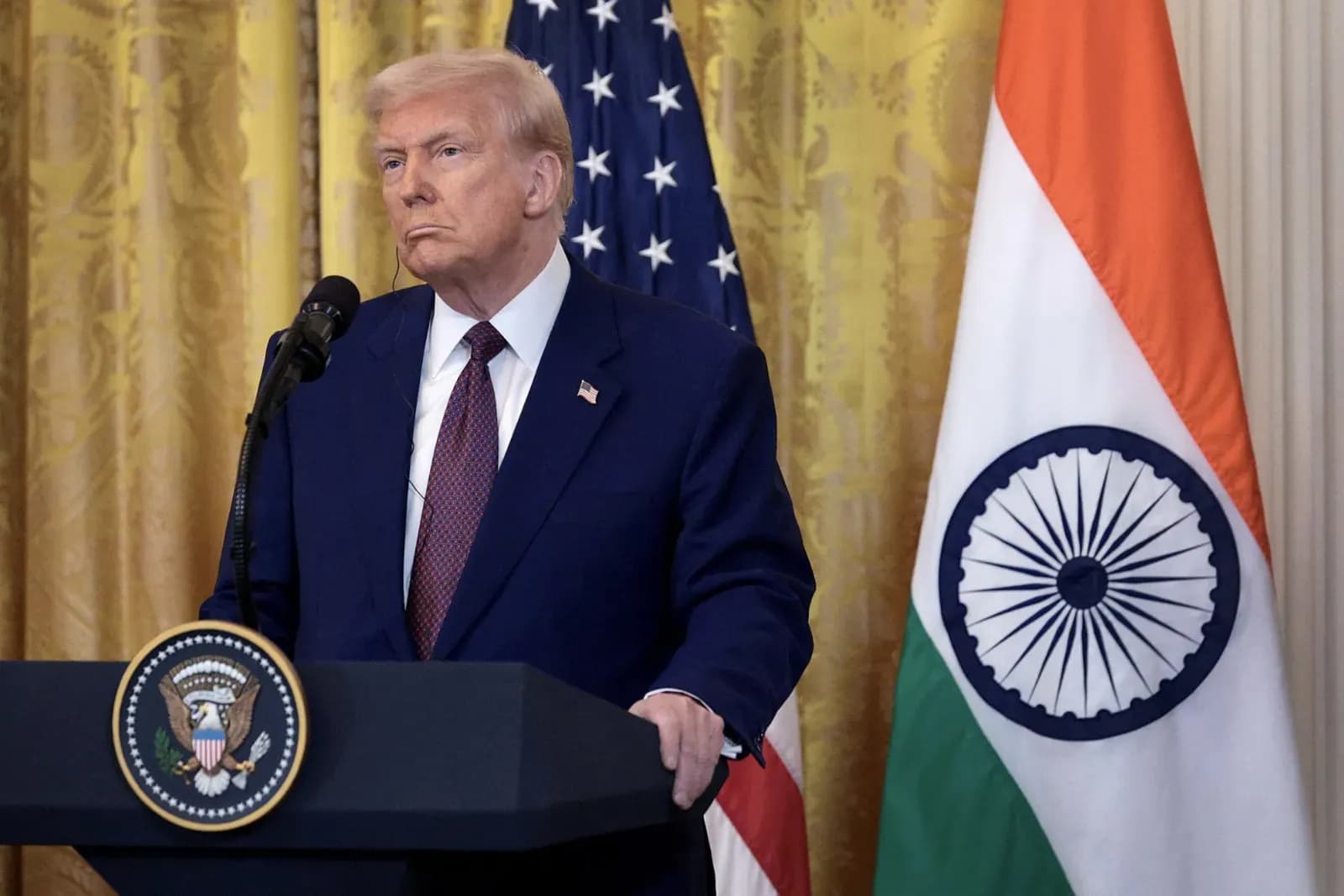
India's 7.8% GDP growth in the first quarter of FY 2026–27 has drawn international attention, with US President Donald Trump citing the country's economic performance while criticising the Federal Reserve's monetary policy.
India's economic performance has once again entered the global economic debate after US President Donald Trump invoked the country's growth rate while criticising the United States Federal Reserve for maintaining relatively high interest rates.
Speaking to reporters at the White House on November 20, following his Asia tour, Trump praised India's approximately 7% economic growth and described its interest rates as relatively low. Drawing a comparison with the Indian economy, he suggested that the United States could achieve GDP growth of 14–20% if it adopted a similar approach to borrowing costs.
He also accused the Federal Reserve of following a political approach to monetary policy, arguing that interest rates should decline when economic indicators improve rather than increase. Referring to former Federal Reserve Chairman Alan Greenspan, Trump praised his approach to interest-rate decisions.
India's Growth Momentum Draws Global Attention
Trump's remarks come against the backdrop of India's sustained economic expansion despite global uncertainties, geopolitical tensions and fluctuations in energy prices.
According to the Ministry of Statistics and Programme Implementation (MoSPI), India's real Gross Domestic Product (GDP) grew by 7.8% in the first quarter of FY 2026–27 (April–June 2026), while nominal GDP registered growth of 10.3%.
The country's economic performance has been supported by several underlying factors rather than a single monetary policy measure. According to the Reserve Bank of India's October 2026 Monetary Policy Committee assessment, strong private consumption, fixed investment, a recovery in merchandise exports and sustained services exports contributed to economic expansion.
Manufacturing activity also recorded robust growth, while the services sector benefited from both domestic and external demand. These developments highlight the importance of India's expanding domestic market and its growing participation in global trade.
The RBI projected India's real GDP growth at 7.1% for FY 2026–27, reflecting its assessment of continued economic resilience amid external risks.
Monetary Policy: Growth and Inflation in Perspective
The RBI increased its policy repo rate by 25 basis points to 5.50% following its October 2026 Monetary Policy Committee meeting. Meanwhile, the US Federal Reserve maintained its federal funds target range at 3.75–4% on October 28, 2026.
The difference reflects the distinct economic conditions and inflationary pressures confronting the two economies. India's central bank has emphasised balancing economic growth with price stability, while the Federal Reserve operates under its dual mandate of maximum employment and stable prices.
Consequently, lower interest rates alone cannot explain India's economic expansion. Domestic demand, investment, productivity, infrastructure development and export performance remain important contributors to long-term growth.
India's Economic Position in a Changing Global Landscape
Beyond the immediate comparison, Trump's remarks highlight India's growing visibility in international economic discussions.
India's expanding manufacturing base, digital infrastructure, services exports and large consumer market have strengthened its position as an important participant in the global economy. Its ability to sustain economic momentum amid international uncertainty also makes its performance relevant to discussions about emerging-market growth.
The country's economic trajectory, however, will depend on sustaining investment, improving productivity, generating employment and managing inflationary pressures. Maintaining this balance will be essential to translating strong quarterly growth into durable long-term development.
Trump's comparison may have been made in the context of his disagreement with the Federal Reserve, but it has also brought India's economic performance into the wider debate over global growth and monetary policy.
As major economies navigate competing priorities of inflation control and economic expansion, India's experience offers an important perspective on the role of domestic demand, investment and structural economic development in sustaining growth.