Opinion
Paytm and Pine Labs Shares Fall Up to 7% as Uncertainty Over UPI Transaction Charges Weighs on Investors
Shares of Paytm's parent company, One 97 Communications, and Pine Labs declined by 7 per cent and 5.4 per cent, respectively, during intraday trading on 19 November 2026 on the BSE. The decline followed reports of a possible further delay in implementing the proposed 0.4 per cent Merchant Discount Rate (MDR) on eligible UPI merchant transactions above ₹2,000. Initially scheduled for 15 October, the rollout was postponed until after Diwali amid concerns over merchant opposition. The delay has raised concerns about potential revenue opportunities for digital payment intermediaries. However, the final implementation timeline remains undecided, pending regulatory clarity from NPCI, the RBI and the government.
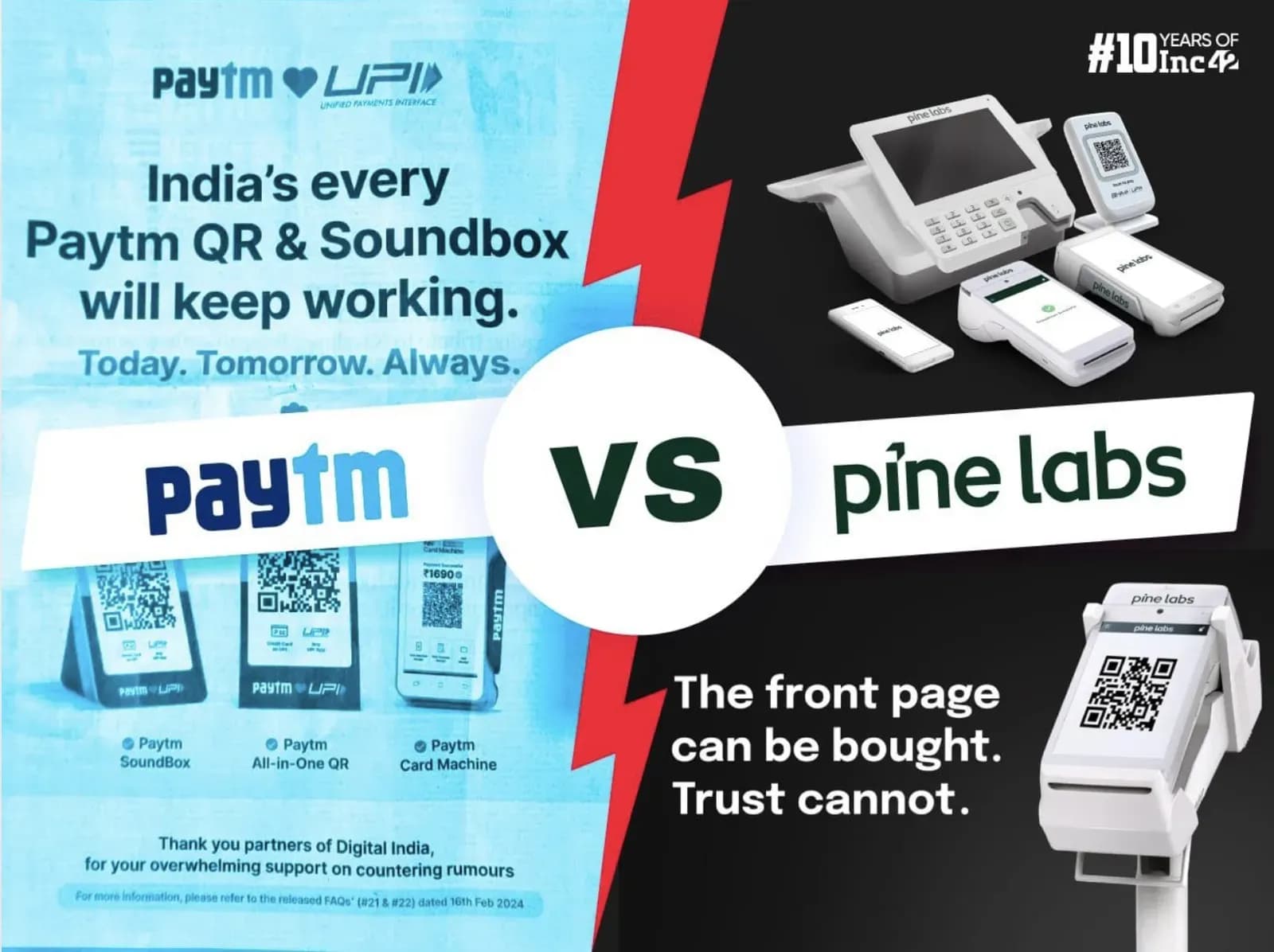
Shares of major digital payment companies Paytm and Pine Labs came under selling pressure on Thursday, 19 November 2026, amid renewed uncertainty over the implementation of the proposed Merchant Discount Rate (MDR) framework for selected Unified Payments Interface (UPI) transactions. Paytm's parent company, One 97 Communications, witnessed a decline of 7 per cent in intraday trading on the BSE, while Pine Labs shares fell by 5.4 per cent. The selling pressure reflected investor concerns that a further delay in introducing transaction charges could affect the revenue prospects of companies operating in India's digital payments ecosystem. The development has brought renewed attention to the debate surrounding the financial sustainability of UPI, which has become one of India's most widely used digital payment systems.
Shares of Paytm and Pine Labs decline
During Thursday's intraday trading, Paytm's parent company, One 97 Communications, fell 7 per cent to ₹1,765.05 per share on the BSE. Pine Labs declined 5.4 per cent to ₹160.05. At approximately 9:29 AM, the BSE Sensex was trading 0.31 per cent lower at 81,745.
The decline came amid profit-booking and concerns regarding the potential postponement of the proposed MDR framework. Despite the day's losses, Paytm had gained approximately 58 per cent over the preceding six months, compared with a 9 per cent rise in the Sensex. Pine Labs had recorded a gain of around 9 per cent during the same period.
What is the proposed UPI MDR framework?
The Merchant Discount Rate (MDR) is a transaction fee associated with digital payments accepted by merchants. It is generally distributed among the participants involved in processing a transaction, including banks and payment service providers.
The proposed framework concerns selected person-to-merchant (P2M) UPI transactions above ₹2,000. According to the framework reported by Business Standard, an MDR of 0.4 per cent was initially scheduled to take effect on 15 October 2026. However, its implementation was subsequently deferred until after Diwali.
Importantly, the proposed charges do not apply to ordinary person-to-person (P2P) transfers or merchant transactions of ₹2,000 and below. NPCI's published FAQs also state that more than 95 per cent of UPI P2M transaction volume consists of transactions up to ₹2,000, which would remain unaffected under the proposed arrangement.
Why has the implementation been delayed?
According to media reports cited by Business Standard and Reuters, concerns over potential opposition from merchants and trade associations have contributed to uncertainty surrounding the rollout.
Reports suggest that implementation could be postponed further, potentially until after the assembly elections scheduled in five states during the first half of 2027. However, no final implementation date has been announced. The government, the Reserve Bank of India (RBI) and the National Payments Corporation of India (NPCI) are yet to finalise the rollout timeline.
The uncertainty has become a concern for payment intermediaries because the proposed framework was expected to create an additional revenue opportunity. A further delay could postpone the expected financial benefits for companies operating in the merchant payments segment.
Potential impact on digital payment companies
The proposed MDR framework is particularly relevant for companies such as Paytm and Pine Labs, which have significant exposure to merchant payment services.
In its second-quarter investor presentation, Pine Labs highlighted the potential business opportunities associated with the proposed UPI MDR framework. The company stated that more than 70 per cent of its digital checkout point transactions were UPI-led. It also reported processing approximately ₹20,000 crore in monthly UPI Gross Transaction Value (GTV), with growth of 68 per cent in compound annual growth rate (CAGR) over the preceding two years.
Pine Labs further indicated that it was targeting monthly UPI GTV of ₹33,000–34,000 crore by FY28. The company reported that more than 65 per cent of its UPI GTV came from transactions exceeding ₹2,000, making the proposed framework relevant to its merchant payments business.
Consequently, uncertainty over the introduction of MDR could affect the anticipated revenue opportunities for payment intermediaries. However, the actual financial impact will depend on the final regulatory framework, applicable transaction categories and implementation timeline.
The decline in Paytm and Pine Labs shares highlights the sensitivity of digital payment companies to regulatory developments and changes in the revenue structure of India's fintech industry. While the proposed MDR framework could provide an additional revenue stream for payment intermediaries, its implementation remains uncertain amid concerns over merchant acceptance and the broader implications for digital payments.
The immediate market reaction reflects investor expectations rather than a confirmed change in the companies' financial performance. Going forward, the decisions taken by NPCI, the RBI and the government regarding the implementation of MDR will be important in determining the revenue outlook of digital payment companies. At the same time, maintaining the affordability and accessibility of UPI will remain central to India's digital payments growth.
More to read
Markets
India's Aluminium Industry Seeks Higher Import Duties: What It Means for Investors and Manufacturers
Markets
India's Stock Market Attracts Record $12 Billion in Foreign Buying Amid Global AI Market Uncertainty

Markets