Opinion
From Armenia to Southeast Asia: India's Rise as a Global Defence Exporter
The article examines India's transformation from a major defence importer into an emerging global exporter of indigenous military equipment and technology. It highlights India's expanding defence partnerships with Armenia in the South Caucasus and the Philippines and Vietnam in Southeast Asia, focusing on exports such as the Swathi Weapon Locating Radar, Pinaka rocket systems, Akash air defence systems, BrahMos supersonic cruise missiles and high-speed guard boats. The article explores how defence exports are becoming an important instrument of India's foreign policy, strengthening strategic partnerships, supporting the Act East Policy and expanding India's presence in the Indo-Pacific. It also discusses challenges related to global competition, manufacturing capacity, timely deliveries, technological advancement and after-sales support. Ultimately, it argues that India must move beyond equipment exports towards joint manufacturing, technology collaboration and long-term defence partnerships to strengthen its position in the global defence industry and contribute to regional security.
Background
Traditionally recognised as one of the world's largest importers of military equipment, India is increasingly positioning itself as a supplier of indigenous defence systems, advanced military technology and maritime net security provider. This transformation reflects the country's broader ambition to strengthen strategic autonomy, expand its domestic defence manufacturing capabilities and establish itself as a reliable security partner for friendly nations.
From supplying advanced artillery systems, air defence platforms and surveillance radars to Armenia in the South Caucasus to exporting the BrahMos supersonic cruise missile system to the Philippines, India's defence partnerships are expanding beyond its immediate neighbourhood. Indian defence products are now reaching more than 80 countries, reflecting the expanding international acceptance of its indigenous manufacturing capabilities.
The government focused on encouraging indigenous research and development, expanding private-sector participation, strengthening defence public sector undertakings (DPSUs) and simplifying export authorisation procedures. This growth has been supported by a diversified manufacturing ecosystem involving organisations such as Hindustan Aeronautics Limited (HAL), Bharat Electronics Limited (BEL), Bharat Dynamics Limited (BDL), Defence Research and Development Organisation (DRDO), Larsen & Toubro and several private defence manufacturers.
India's export portfolio now includes artillery systems, missile platforms, radars, armoured vehicles, naval equipment, ammunition, surveillance systems and aircraft components. The government has also established an ambitious target of achieving ₹50,000 crore in annual defence exports by 2029. Defence exports are increasingly becoming an instrument of foreign policy, strategic engagement and regional diplomacy, strengthening India's position in an evolving international security environment.
Armenia: India's Growing Strategic Footprint in the South Caucasus
One of the most significant examples of India's expanding defence export capabilities is its growing partnership with Armenia. Located in the strategically important South Caucasus, Armenia has increasingly diversified its defence procurement following changing regional security dynamics and concerns regarding the reliability of traditional defence suppliers.
India emerged as an important defence supplier by offering a range of indigenous military platforms suited to Armenia's operational requirements.India's defence engagement with Armenia includes several significant indigenous platforms like Swathi Weapon Locating Radar which is developed by DRDO to identifies the location of enemy artillery, mortars and rocket launchers by tracking incoming projectiles. Armenia placed an order for the system in 2020, and deliveries were completed in 2022.
Pinaka Multi-Barrel Rocket Launcher System and Advanced Towed Artillery Gun System (ATAGS) were developed by DRDO and manufactured with participation from Indian defence companies. Armenia became the first international customer for India's indigenous Akash Surface-to-Air Missile defence System. India's defence cooperation with Armenia has also expanded into areas involving drones, counter-drone systems and additional artillery platforms.
India has emerged as one of Armenia's most important defence partners, with cooperation expanding beyond individual equipment purchases. The India-Armenia defence partnership carries significance beyond commercial transactions. For India, the partnership strengthens its diplomatic presence in the South Caucasus, a region influenced by competing interests involving Russia, Türkiye, Iran and Western powers. Armenia therefore represents an important example of how India's indigenous defence manufacturing capabilities can translate into wider geopolitical influence.
Southeast Asia: Expanding India's Defence Presence in the Indo-Pacific
The Indo-Pacific has witnessed increasing geopolitical competition, maritime security concerns and military modernisation. Several Southeast Asian countries are strengthening their naval capabilities, coastal surveillance systems and air defence infrastructure amid evolving regional security challenges. For India Southeast Asia is a strategically important region for its defence export ambitions.
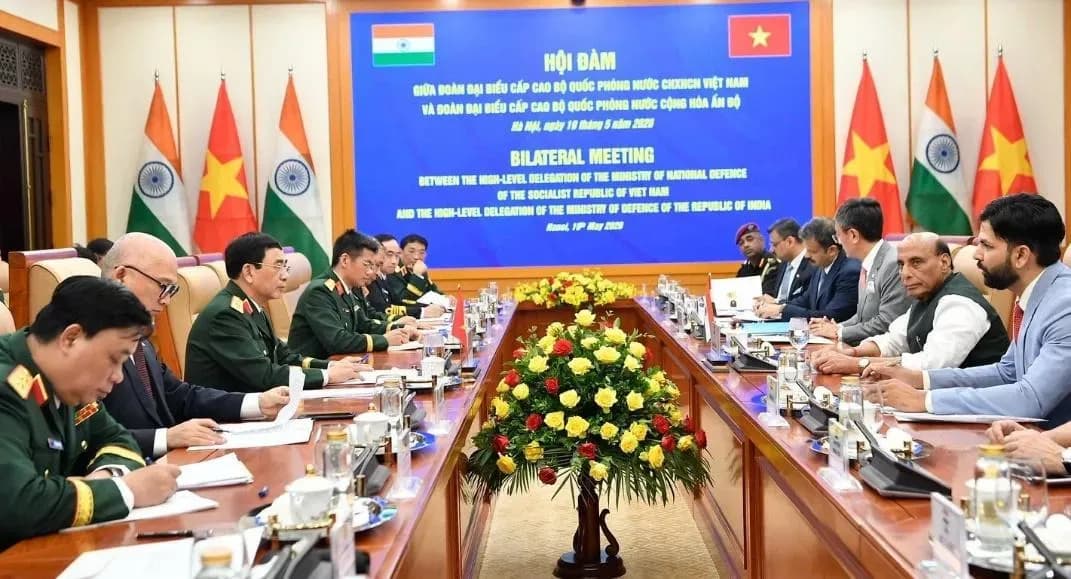
The Philippines represents one of the most important milestones in India's defence export journey. In January 2022, BrahMos Aerospace Private Limited signed a contract worth approximately US$375 million with the Philippine Department of National Defence for the supply of a shore-based anti-ship missile system. The agreement marked India's first major export contract for the BrahMos missile system.
The first batch of BrahMos missile systems was delivered to the Philippines in April 2024. It establishes a foundation for future defence industrial cooperation and creates opportunities for India to position itself as an alternative defence supplier in the region. In June 2022, India handed over 12 high-speed guard boats to Vietnam under a US$100 million Defence Line of Credit. Five boats were constructed at Larsen & Toubro's shipyard in India, while the remaining seven were manufactured at Hong Ha Shipyard in Vietnam.
This arrangement demonstrated India's willingness to support not only defence exports but also local manufacturing and industrial cooperation with Vietnam. Beyond the Philippines and Vietnam, India is exploring opportunities to expand defence engagement with other Southeast Asian countries, including Indonesia, Thailand and Malaysia.
Defence Exports as an Instrument of India's Foreign Policy
Defence partnerships create long-term relationships between governments, military establishments and defence industries. Unlike conventional commercial transactions, military equipment procurement often involves years of maintenance, technical assistance, training, spare parts and institutional engagement. This creates sustained opportunities for diplomatic cooperation. Affordable and technologically capable defence equipment can provide developing countries with additional procurement options. Defence cooperation with countries such as the Philippines and Vietnam complements India's Act East Policy and contributes to its broader vision of a free, open and stable Indo-Pacific.
Challenges to India's Global Defence Export Ambitions
India operates in a highly competitive international arms market dominated by countries such as the United States, Russia, France, China, South Korea and Israel. These countries possess established defence manufacturing ecosystems, long-standing military relationships and extensive after-sales support networks. India must therefore demonstrate that its systems can compete not only on price but also on technological performance, reliability and operational effectiveness.
Timely delivery remains an important factor in international defence procurement. Delays in manufacturing, supply-chain disruptions and limited production capacity can affect India's credibility as a reliable supplier. India must establish stronger international maintenance, repair and overhaul (MRO) networks to ensure that its defence partnerships remain sustainable.
India needs sustained investment in research and development, closer collaboration between DRDO, private manufacturers, academic institutions and international partners, and greater emphasis on next-generation military technologies. Defence exports can carry diplomatic consequences, particularly when equipment is supplied to countries located in strategically contested regions.India must carefully balance its commercial interests, strategic partnerships and commitment to maintaining regional stability. Its defence export policy must also account for end-user assurances, export controls and responsible technology transfers.
Conclusion
India's journey from a defence importer to an emerging global exporter represents a significant transformation in its industrial capabilities and strategic outlook. The partnerships with Armenia in the South Caucasus and the Philippines and Vietnam in Southeast Asia demonstrate that Indian defence equipment is increasingly finding markets across different geopolitical regions.
More importantly, India must move beyond being an equipment supplier towards becoming a long-term defence technology and industrial partner. Greater emphasis on joint research, co-production, maintenance infrastructure and technology collaboration can strengthen the sustainability of its international partnerships.
As geopolitical competition intensifies and countries increasingly seek to diversify their defence procurement, India has an opportunity to establish itself as a credible alternative in the global arms market. From the South Caucasus to the Indo-Pacific, India's expanding defence partnerships reflect a broader strategic transition. The country is no longer seeking only to secure its own defence requirements but is increasingly positioning itself as a contributor to the evolving global security architecture.
References
1. Defence Research and Development Organisation. (2020, March 5). DRDO news. https://drdo.gov.in/drdo/sites/default/files/drdo-news-documents/DRDO%20News%2005%20March%202020.pdf
2. Embassy of India, Hanoi. (n.d.). Bilateral relations. https://www.indembassyhanoi.gov.in/page/bilateral-relations/
3. Indian Council of World Affairs. (n.d.). Indian Council of World Affairs. https://icwa.in/index.php
4. Ministry of Defence, Government of India. (2022, June 9). Raksha Mantri Shri Rajnath Singh hands over 12 High Speed Guard Boats, constructed under India’s US$100 million Line of Credit, to Vietnam. Press Information Bureau. https://www.pib.gov.in/PressReleasePage.aspx?PRID=1832495
5. Ministry of Defence, Government of India. (2024, December 26). Year End Review 2024. Press Information Bureau. https://www.pib.gov.in/PressReleasePage.aspx?PRID=2088180
6. Ministry of Defence, Government of India. (2026, April 2). Defence exports skyrocket to record Rs 38,424 crore in Financial Year 2025–26, a massive 62.66% increase over previous fiscal. Press Information Bureau. https://www.pib.gov.in/PressReleseDetailm.aspx?PRID=2248124
7. Press Information Bureau. (2025, June 10). India’s defence leap: From indigenous production to global exports, redefining national security. Government of India. https://www.pib.gov.in/PressNoteDetails.aspx?ModuleId=3&NoteId=154617
8. Press Information Bureau. (2026, June 17). The defence decade: Enhanced capability, greater capacity, and stronger credibility. Government of India. https://www.pib.gov.in/PressReleasePage.aspx?PRID=2273854
9. Press Information Bureau. (2026, June 17). The defence decade: Enhanced capability, greater capacity, and stronger credibility. Government of India. https://www.pib.gov.in/PressNoteDetails.aspx?ModuleId=3&NoteId=158925
10. Prasar Bharati. (2024, April 20). India delivers 1st batch of BrahMos supersonic cruise missiles to Philippines. News on AIR. https://newsonair.gov.in/india-delivers-1st-batch-of-brahmos-supersonic-cruise-missiles-to-philippines/
11. Stockholm International Peace Research Institute. (2026, March). Trends in international arms transfers, 2025. https://www.sipri.org/sites/default/files/2026-03/fs_2603_at_2025.pdf
More to read
Defence
India–US Defence Partnership: How Joint Manufacturing and Ship Repairs Are Creating New Business Opportunities
Defence
India's Defence Industry Gets a Titanium Boost as PTC Industries Secures 400-Tonne Order
Defence