Opinion
India–US Defence Partnership: How Joint Manufacturing and Ship Repairs Are Creating New Business Opportunities
India–US defence cooperation is expanding beyond military purchases into manufacturing partnerships, aircraft maintenance and naval ship repairs. The proposed Javelin missile co-production initiative between Tata Advanced Systems and the Javelin Joint Venture could create opportunities for Indian manufacturers and suppliers. Meanwhile, a ₹413 crore contract with Boeing India Defense for P-8I aircraft inspection and the arrival of US Navy vessel USNS Wally Schirra at L&T's Kattupalli shipyard highlight India's growing role in defence maintenance services. With India's defence production reaching ₹1.78 lakh crore in FY2025–26 and the private sector contributing approximately 24%, these developments underline the economic potential of joint manufacturing, technology cooperation, skilled employment and domestic supply chains. However, the actual commercial impact will depend on the implementation of proposed projects and the scale of domestic participation.
From Javelin missile co-production discussions to P-8I aircraft maintenance and US Navy ship repairs, the partnership is opening new avenues for India's defence manufacturing and maintenance industries.
India–US defence cooperation is increasingly moving beyond the purchase of military equipment towards manufacturing partnerships, aircraft maintenance and naval ship-repair services. These developments are creating opportunities for Indian companies to participate in a wider defence industrial ecosystem, potentially generating demand for skilled labour, specialised engineering and domestic supply chains.
Three developments in 2026 illustrate this shift: the proposed co-production of Javelin anti-tank missiles, a ₹413 crore contract for maintenance of India's P-8I maritime patrol aircraft and the arrival of a US Navy supply vessel at Larsen & Toubro's Kattupalli shipyard.
Together, they highlight how defence partnerships can create economic opportunities beyond the initial sale of military equipment.
From Missile Purchases to Manufacturing Partnerships
On 28 August 2026, India and the United States signed an agreement for the purchase of American-made Javelin anti-tank guided missile systems through the US Foreign Military Sales process. The following day, the US Embassy described the agreement as opening opportunities for future cooperation between the defence industries of both countries.
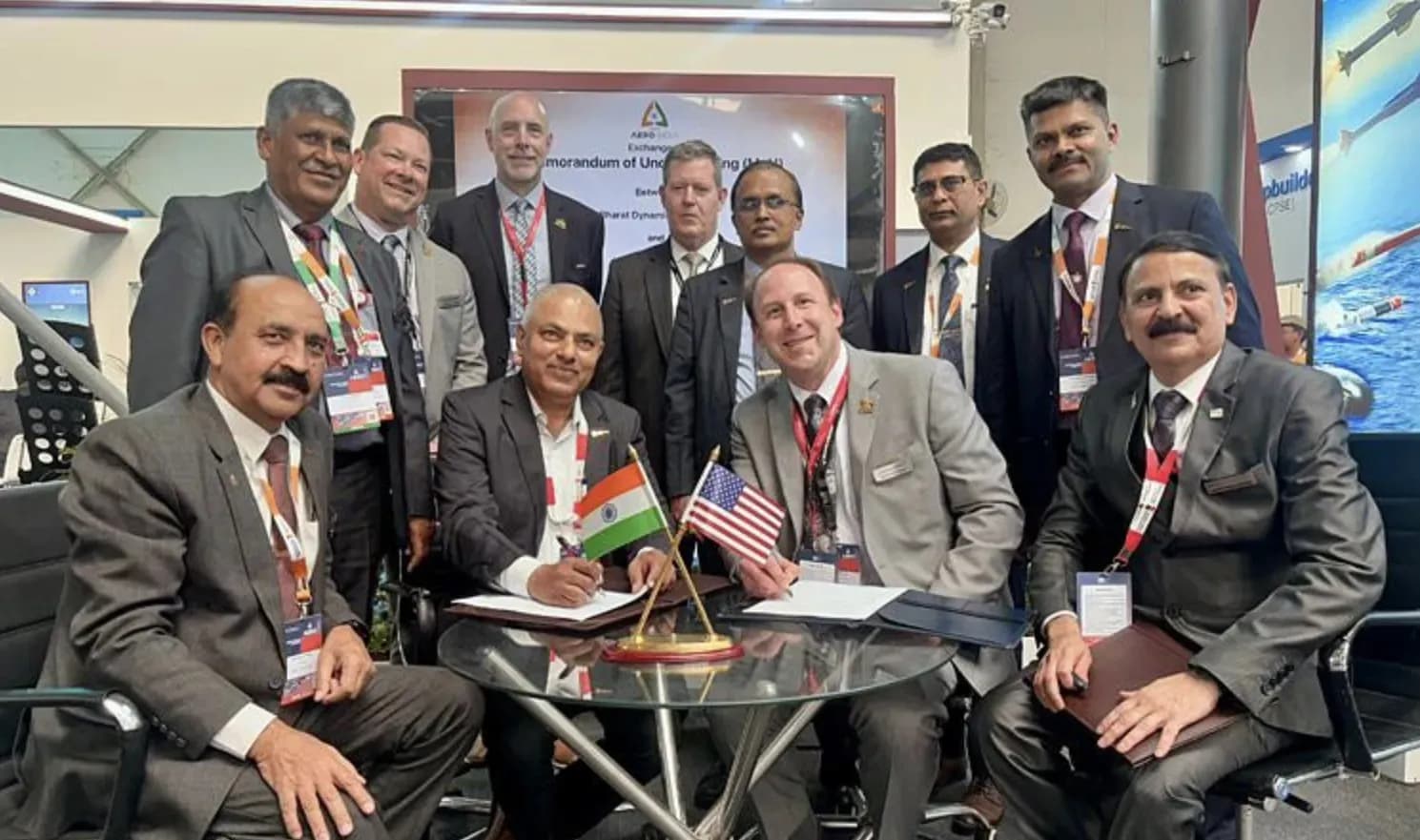
A significant development followed on 30 August, when Tata Advanced Systems Limited and the Javelin Joint Venture, comprising Lockheed Martin and Raytheon, signed a memorandum of understanding for co-production of the Javelin All Up Round in India.
According to the joint venture's announcement, the companies will explore establishing a facility for final assembly and integration, along with component-production capabilities in India. Tata Advanced Systems was selected as the proposed Indian industry partner.
The arrangement could create opportunities for Indian suppliers, engineering companies and skilled manufacturing professionals. It may also help develop domestic expertise in precision manufacturing and defence-system integration.
However, the distinction between an agreement and an operational manufacturing facility is important. The MoU sets out a co-production initiative, but the final facility, production schedule and associated investment details have not been publicly established. The number and total value of Javelin missiles being purchased by India have also not been disclosed.
The Business of Maintaining Military Aircraft
Another important development came on 27 March 2026, when the Ministry of Defence signed a ₹413 crore contract with Boeing India Defense Private Limited for depot-level inspection of the Indian Navy's P-8I long-range maritime reconnaissance aircraft.
The contract was signed under the Buy Indian category with 100% indigenous content. Boeing India Defense is a wholly owned Indian subsidiary of Boeing.
The agreement is significant because it strengthens the availability of domestic maintenance, repair and overhaul (MRO) capabilities for a sophisticated military aircraft fleet. Depot-level maintenance involves specialised inspection and repair work beyond routine servicing.
For India's defence economy, developing such capabilities can reduce the need to send equipment overseas for certain maintenance activities, support domestic technical expertise and create opportunities for Indian service providers.
It also highlights an important business segment that often receives less attention than new defence procurement: the long-term maintenance and servicing of military platforms after they enter service.
US Navy Ship Repairs Bring Opportunities to Indian Shipyards
India's growing role in maritime maintenance received another boost on 20 November, when US Navy supply ship USNS Wally Schirra arrived at L&T's Kattupalli shipyard near Chennai for repairs under the India–US Master Ship Repair Agreement (MSRA).
According to the Ministry of External Affairs, this was the fifth occasion on which a US naval vessel had undertaken repairs at Kattupalli.
The cooperation began in August 2022, when USNS Charles Drew became the first US Navy vessel to undergo repairs at an Indian shipyard. L&T subsequently signed the Master Ship Repair Agreement with the US Navy in April 2023, institutionalising the arrangement.
The latest visit is particularly significant because it marks the resumption of US naval repair activity at Kattupalli after the previous visit in December 2024. It is also the first US naval vessel to arrive for repairs following the implementation of revised procedures facilitating the entry and exit of foreign ship crews.
For the Indian shipbuilding and repair industry, such engagements can strengthen technical experience, create work for specialised contractors and improve the international visibility of domestic shipyards. However, the government has not disclosed the financial value of the current repair assignment.
A Growing Defence Manufacturing Ecosystem
These developments come as India's domestic defence industry expands. According to the Ministry of Defence, defence production reached a record ₹1.78 lakh crore in FY2025–26, representing 15.6% growth over the previous financial year.
The private sector contributed approximately 24% of total production, equivalent to around ₹42,000 crore. Defence exports also reached a record ₹38,424 crore during the same financial year.
The figures demonstrate the increasing importance of private companies in India's defence manufacturing ecosystem. Partnerships involving Tata Advanced Systems, Boeing India Defense and L&T illustrate how domestic firms can participate in different stages of the defence value chain, including production, integration, inspection and maintenance.
The broader policy direction is also reflected in the 2025 US–India Major Defence Partnership Framework, which identifies defence industrial cooperation, joint development and production, advanced manufacturing and regional maintenance capabilities as priorities.
Beyond Defence Deals: The Economic Opportunity
The expanding India–US defence partnership presents opportunities across several interconnected industries. Missile co-production could support specialised manufacturing and component suppliers, aircraft maintenance could strengthen India's MRO ecosystem, while naval repair engagements could improve the competitiveness of domestic shipyards.
The long-term economic impact, however, will depend on how quickly proposed manufacturing arrangements translate into operational facilities, how much domestic value is created and whether Indian suppliers can meet international quality and cost requirements.
For India, the objective is not simply to purchase advanced military equipment but also to build the industrial capabilities required to manufacture, maintain and support it.
As defence cooperation increasingly incorporates manufacturing and maintenance, the economic relationship between India and the United States could become more closely connected to India's ambitions of becoming a competitive global defence manufacturing and services hub.