Opinion
From Corporate Tax Cuts to Salary Hikes: What Should Indians Expect from Budget 2027?
The upcoming Union Budget 2027–28 is expected to bring renewed attention to corporate tax reforms, employment generation and wage growth. Following Prime Minister Narendra Modi's appeal to businesses to contribute more towards job creation and better salaries, the article examines whether tax benefits are translating into wider economic gains. It analyses manufacturing growth, employment trends, wage data and possible policy measures, including employment-linked incentives, MSME support and skill development, to explore how Budget 2027 could benefit both businesses and ordinary working Indians.
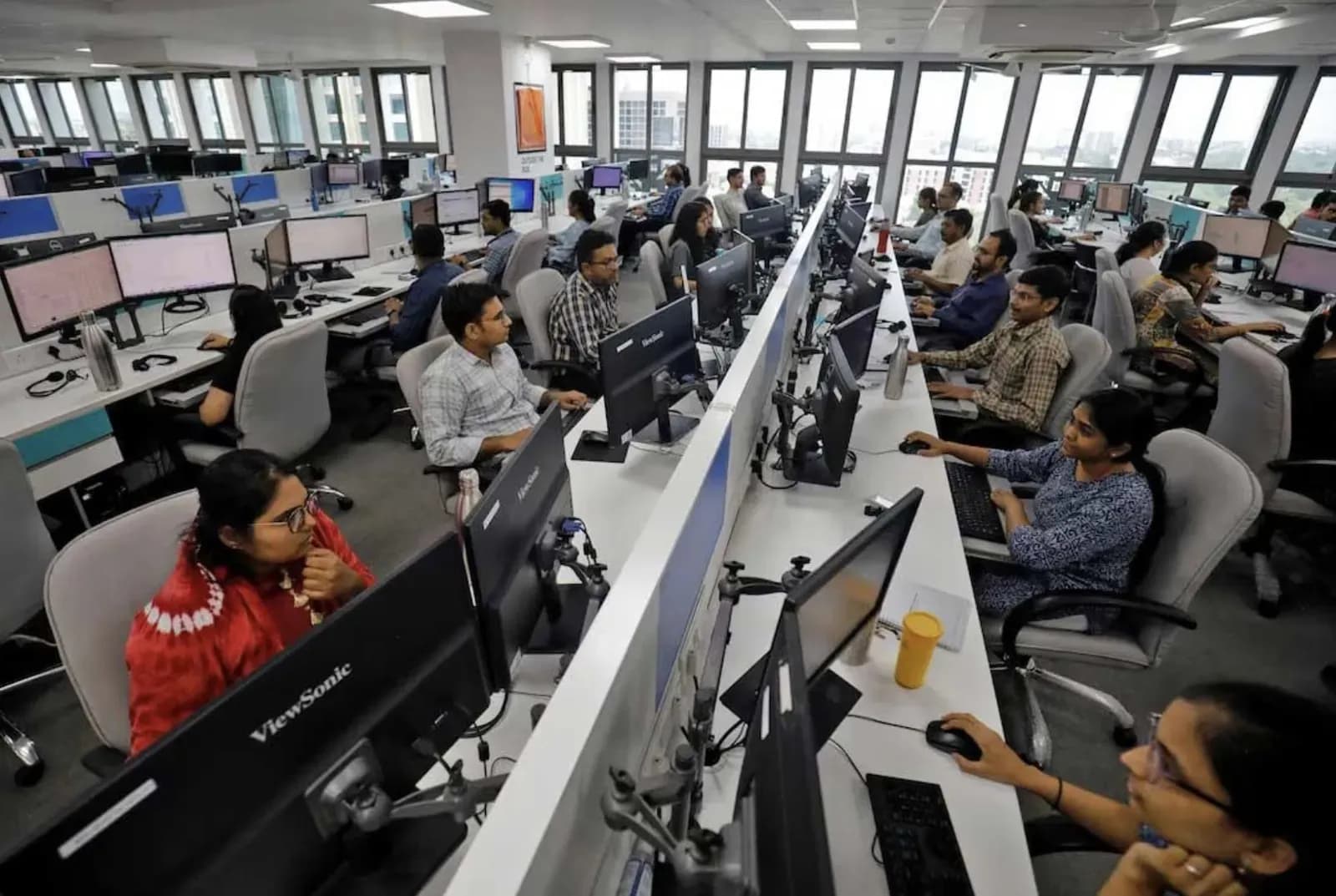
As preparations for the Union Budget 2027–28 gather momentum, the relationship between corporate tax concessions, employment generation and wage growth is emerging as an important policy issue. Prime Minister Narendra Modi's recent message to India's corporate sector has brought this question into sharper focus: have businesses translated the benefits of government tax reforms into more jobs, better salaries and greater investment?
Addressing the annual gathering of the Federation of Indian Chambers of Commerce and Industry (FICCI) on November 19, 2026, Modi questioned whether corporate India had done enough to expand employment and improve employee incomes following successive tax and business reforms. He urged companies to contribute more actively to India's growth rather than expecting the government to drive economic expansion on its own.
The remarks come as Finance Minister Nirmala Sitharaman holds pre-Budget consultations with industry representatives and other stakeholders ahead of the next financial year.
From Tax Concessions to Employment Generation
One of the most significant changes in India's corporate taxation framework came in 2019, when the government introduced an optional concessional tax rate of 22% for eligible domestic companies under Section 115BAA of the Income-tax Act, subject to specified conditions and the foregoing of certain deductions. Eligible new manufacturing companies were also offered a concessional rate of 15% under Section 115BAB.
These measures were intended to improve business competitiveness, encourage investment and support domestic manufacturing. However, lower tax liabilities do not automatically translate into higher employment. Companies may use additional cash flows to repay debt, invest in automation, strengthen balance sheets or distribute returns to shareholders.
The policy challenge, therefore, is to ensure that the benefits of a favourable business environment contribute more visibly to productive investment and employment.
What the Latest Industrial Data Reveals
Official industrial statistics offer a useful picture of the relationship between manufacturing expansion and employment.
According to the Ministry of Statistics and Programme Implementation's Annual Survey of Industries (ASI) 2024–25, released in November 2026, the manufacturing corporate sector recorded a 9.28% increase in gross value added (GVA) over the previous year. The number of persons engaged in this segment increased by 7.57%, while the number of factories in operation rose by 3.45%.
The survey also reported a 2.25% increase in GVA per person engaged, indicating an improvement in labour productivity.
These figures suggest that manufacturing growth is creating employment alongside higher value addition. However, productivity gains and job creation need to be accompanied by competitive wages and better working conditions if industrial expansion is to translate into broader household prosperity.
The distribution of employment also matters. The ASI found that factories with plant and machinery investment of up to ₹5 crore accounted for 78.69% of operating factories and 34.32% of persons engaged. This highlights the importance of smaller industrial units in employment generation, even though larger factories account for a much greater share of capital and output.
The Wage Question: Growth Must Reach Employees
Employment numbers alone cannot measure the quality of economic growth. Wage levels, job security, social protection and opportunities for career progression are equally important.
The latest Periodic Labour Force Survey (PLFS) Annual Report 2025, published by MoSPI, showed that the share of regular wage and salaried workers in total employment increased to 23.6% in 2025, compared with 22.4% in 2024. It also reported nominal wage growth among women of 7.2% in regular wage and salaried employment between 2024 and 2025.
These improvements are encouraging, but the broader challenge remains significant: ensuring that economic expansion produces stable employment and rising real incomes across sectors and income groups.
For businesses, higher wages can also have an economic advantage. Better employee purchasing power supports consumption, which in turn creates demand for goods and services. Stronger domestic demand can encourage companies to expand production and invest in additional capacity, creating a potentially reinforcing cycle of growth.
What Could Budget 2027–28 Offer Businesses?
Industry bodies are seeking measures that improve the investment climate. FICCI, for instance, has called for changes to long-term capital gains taxation on listed securities, arguing that a more predictable and competitive tax framework could support long-term investment.
However, the Budget's challenge will be to balance industry demands with revenue requirements and fiscal discipline.
Rather than relying exclusively on broad tax concessions, the government could consider targeted employment-linked incentives for businesses that demonstrate additional formal hiring, sustained payroll growth and investment in workforce training. Such measures would need clear eligibility rules, independent verification and safeguards against companies simply relabelling existing jobs.
Greater support for micro, small and medium enterprises (MSMEs) could also have a significant impact. These businesses are important employment generators but often face constraints involving credit access, delayed payments, compliance costs and limited technological capacity. Easier access to finance, faster settlement of dues and incentives for technology adoption could help them expand operations and recruit more workers.
Investment in vocational education, apprenticeships and industry-specific skills would further help bridge the gap between employers' requirements and the capabilities of India's expanding workforce.
Beyond Tax Cuts: A Shared Growth Responsibility
India's next stage of economic expansion will require more than favourable tax rates. It will depend on whether businesses invest in productive capacity, create sustainable jobs and ensure that employees share in the benefits of rising corporate performance.
The upcoming Union Budget 2027–28 presents an opportunity to strengthen this relationship through targeted incentives, simpler regulations, MSME support and investments in skills and infrastructure.
Ultimately, the measure of successful economic reform will not be limited to higher corporate profits or increased investment announcements. It will also be reflected in the number of quality jobs created, the improvement in real wages and the extent to which economic growth strengthens household purchasing power.
More to read
Companies
Adani's $1 Billion Copper Deal: Can Recycling Reduce India's Dependence on Imports?

Companies
Tata Sons IPO Battle: Why RBI's Listing Push Has Triggered a Major Corporate Governance Dispute.

Companies