Opinion
India's Sixth-Generation Fighter Ambitions: A New Chapter in Defence Modernisation.
The article explores India's roadmap towards developing sixth-generation fighter aircraft capabilities amid the rapid transformation of aerial warfare through artificial intelligence, autonomous combat systems, stealth technology and advanced sensors. It examines the Advanced Medium Combat Aircraft (AMCA) programme as a foundation for future aerospace development, alongside India's efforts to explore participation in France's Future Combat Air System (FCAS) programme. The article highlights the strategic importance of next-generation airpower in addressing China's growing aerospace capabilities, while examining key challenges such as indigenous engine development, defence research funding, technological self-reliance and industrial capacity. It argues that India's long-term success in sixth-generation airpower will depend on sustained investment, indigenous innovation and international collaboration to strengthen its strategic autonomy.
Background
Aerial warfare is undergoing a significant transformation, driven by advancements in artificial intelligence (AI), autonomous systems, stealth technology, advanced sensors and network-centric operations. Developing sixth-generation fighter capabilities is an important dimension of future military preparedness as major military powers invest in next-generation combat aircraft. India has begun to explore the technological and strategic requirements of sixth-generation airpower. The Defence Research and Development Organisation (DRDO) has identified technologies essential for future sixth-generation platforms.
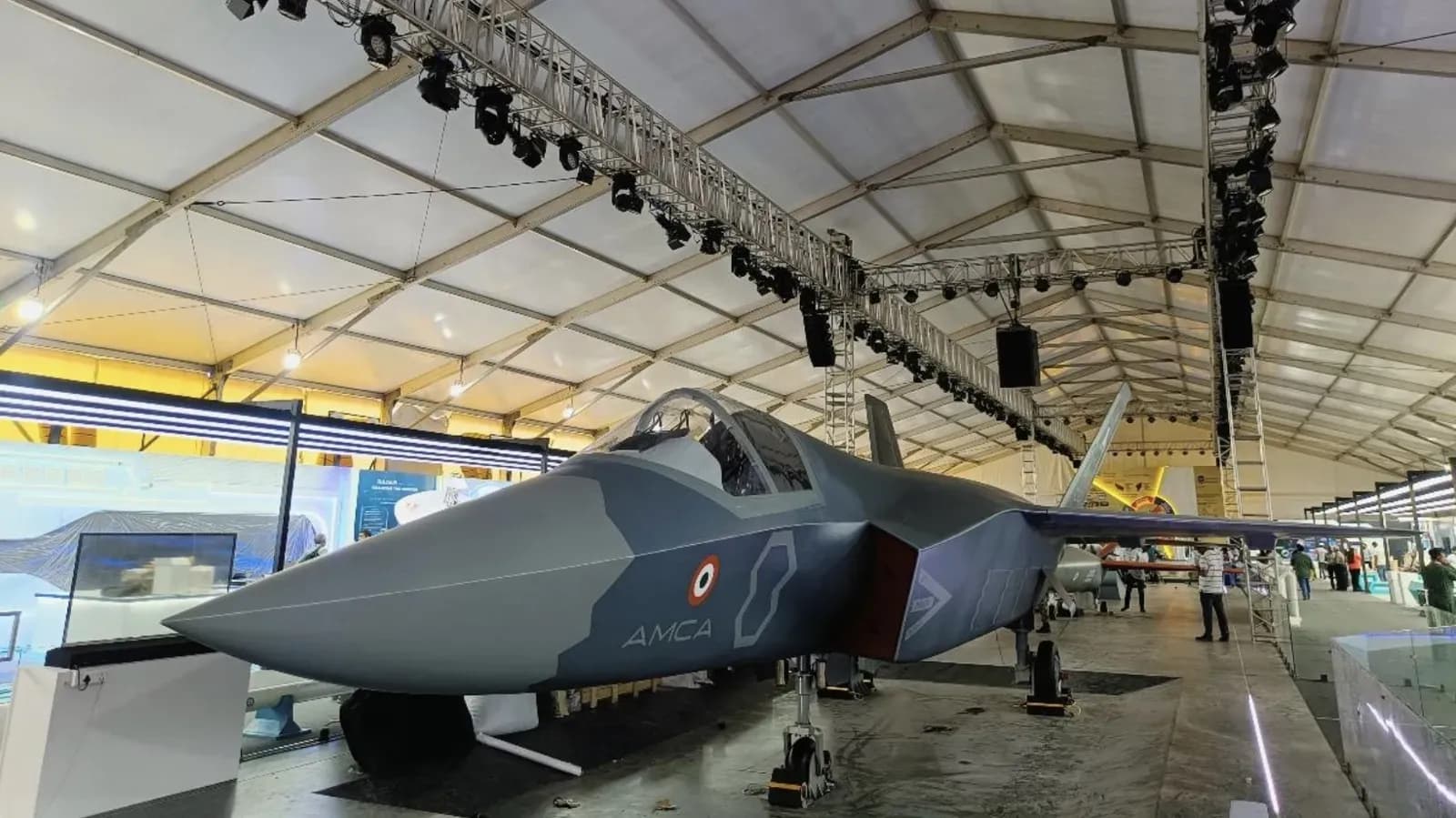
India is pursuing the indigenous development of its fifth-generation Advanced Medium Combat Aircraft (AMCA). The Ministry of Defence has informed a Parliamentary Standing Committee that efforts have been initiated to explore participation in the French-led Future Combat Air System (FCAS) programme. These developments indicate India's growing interest in moving beyond conventional fighter aircraft modernisation towards a more integrated, technology-driven approach to air combat. However, translating this ambition into an operational capability will require sustained investment, indigenous research, industrial collaboration and technological advancement.
India's fighter aircraft modernisation was initiated with the conventional idea of strengthening indigenous aerospace capabilities while reducing dependence on foreign suppliers. The Advanced Medium Combat Aircraft programme represents India's effort to enter the fifth-generation combat aviation domain. The Light Combat Aircraft (LCA) Tejas programme marked an important step towards domestic fighter aircraft development.
The Defence Minister Rajnath Singh had approved the execution model for the AMCA programme through industry partnerships in May 2025. The Aeronautical Development Agency (ADA), under DRDO, is responsible for executing the programme. This initiative seeks to strengthen India's domestic aerospace industrial ecosystem and support the development of an indigenous stealth fighter prototype. Under this framework, Indian public and private sector companies were given equal opportunities to participate independently or through joint ventures and consortia.
Countries around the globe are investing in sixth-generation fighter programmes that seek to integrate crewed aircraft with unmanned systems, artificial intelligence, advanced sensors and interconnected combat networks. Recognising these developments, the Government of India has initiated efforts to join the French-led Future Combat Air System (FCAS). The initiative reflects India's interest in accessing and contributing to emerging next-generation aviation technologies.
Significance of Sixth-Generation Fighter Capabilities for India's Strategic Future
The growing importance of sixth-generation fighter technology must be understood against the changing nature of the Indo-Pacific security environment. China's expanding aerospace capabilities make this transition particularly relevant. Its development of advanced stealth aircraft, including the J-20, demonstrates the direction of its long-term military modernisation. For India, maintaining an effective air deterrence capability becomes essential.
A sixth-generation combat system could provide several strategic advantages; integrated information from airborne radar, satellites, ground-based sensors and other platforms could improve situational awareness. Second, this system could allow a single crewed aircraft to coordinate multiple unmanned combat aircraft, expanding operational reach without exposing pilots to every high-risk mission.
In the Nineteenth Report on Demands for Grants (2026–27), presented on 18 March 2026, the Parliamentary Standing Committee on Defence identified sixth-generation fighter aircraft, hypersonic missiles, artificial intelligence, data analytics, robotics and automation, advanced drone technology, machine learning and quantum technology as emerging areas shaping the future of warfare. (Source: Nineteenth Report: Demands for Grants (2026–27), Ministry of Defence. ) The committee recommended adequate research funding and a separate budget head for critical and emerging technologies. This indicates that India's future airpower requirements are increasingly being considered within a wider framework of technological and operational preparedness, rather than simply as a replacement for existing fighter aircraft.
From AMCA to Sixth Generation: Building on India's Existing Aerospace Foundation
India's most immediate pathway towards advanced combat aviation lies in successfully developing its fifth-generation Advanced Medium Combat Aircraft (AMCA). The programme is important because several technologies required for sixth-generation systems build upon capabilities associated with fifth-generation aircraft, including low-observable design, advanced avionics, sensor integration and sophisticated flight-control systems. The Defence Minister also stated that the AMCA programme envisages the development of five prototypes before moving towards series production.
This approach is significant because prototype development allows engineers to validate aircraft design, flight performance, structural integrity, avionics and stealth-related technologies before operational production. India must use the AMCA programme to develop expertise in areas such as advanced composite materials, radar-absorbing structures, electronic warfare, active electronically scanned array (AESA) radar, sensor fusion and secure communication systems.
These capabilities can subsequently contribute to the development of more advanced combat platforms. The broader industrial implications are equally important. The AMCA execution model creates an opportunity to move Indian defence companies beyond component manufacturing towards aircraft design, systems integration and advanced aerospace engineering. Such industrial experience will be essential if India intends to undertake a more complex sixth-generation programme in the future.
Artificial Intelligence, Autonomous Combat Aircraft and the Future of Network-Centric Warfare
The most significant difference between conventional fighter aircraft and emerging sixth-generation combat systems may lie in how they operate within a wider military network. DRDO has developed unmanned aerial systems, airborne early-warning technologies, electronic warfare systems, data links and advanced radar technologies. The parliamentary report records that 221 DRDO projects were completed between 2020 and 2025 at a total cost of ₹9,576 crore.
Artificial intelligence and sensor fusion: Future aircraft will generate and receive enormous quantities of information from radar, electro-optical sensors, electronic intelligence systems and external surveillance platforms. AI-enabled processing can help identify threats, prioritise information and support pilots in decision-making.
Collaborative combat aircraft: India will need to develop unmanned platforms capable of performing surveillance, electronic warfare, decoy operations and selected strike missions alongside crewed fighters. These systems could extend operational reach while reducing the exposure of pilots to high-risk environments.
Secure communications and combat-cloud architecture: An advanced fighter will require resilient communication links to exchange information with satellites, airborne early-warning aircraft, ground-based command centres and unmanned systems. Cybersecurity, electronic protection and the ability to operate under communication disruption will therefore be critical.
India and France: Exploring a Partnership in Sixth-Generation Air Power
France's Future Combat Air System (FCAS) originally conceived as a joint programme involving France, Germany and Spain. FCAS aimed to develop an integrated combat architecture combining a next-generation crewed fighter, uncrewed remote carriers and a digital combat cloud. However, disagreements over industrial leadership, workshare and intellectual property led France and Germany to abandon their joint fighter-development effort in June 2026.
Developing sixth-generation fighter technology independently would require substantial financial resources, scientific expertise and decades of research. International cooperation could therefore become an important component of India's strategy. An important development emerged in August 2026, when the Ministry of Defence initiated efforts to participate in the French-led Future Combat Air System (FCAS) programme.
For India, participation could provide opportunities in areas such as advanced propulsion, stealth technologies, electronic warfare, artificial intelligence, autonomous combat systems and next-generation sensors. India must therefore approach such partnerships with a clear strategic objective: developing domestic technological expertise while benefiting from international research and engineering experience.
India’s Funding and Industrial Capacity
The development of sixth-generation aircraft will require long-term financial commitment. Research into advanced propulsion, stealth materials, autonomous systems, electronic warfare and artificial intelligence involves high initial expenditure, prolonged testing and continuous technological upgrades. There are also encouraging indicators within India's research ecosystem. As of December 2025, approximately 25% of the Defence R&D budget had been opened to industry, start-ups and academia.
DRDO had established 15 Industry-Academia Centres of Excellence covering 82 research areas and built a network of approximately 2,000 industries. The government must now ensure that emerging aviation technologies receive sustained funding, clearly defined research objectives and time-bound development milestones. A dedicated research funding mechanism for critical and emerging technologies, as recommended by the Parliamentary Standing Committee, could improve accountability and prevent future programmes from being delayed due to fragmented funding.
The Engine Challenge: Why Indigenous Propulsion Will Determine India's Success
One of the most important factors determining India's ability to develop advanced fighter aircraft is its capability to manufacture high-performance indigenous aero engines. An aircraft's engine influences its speed, range, payload, manoeuvrability, power generation and thermal management. Sixth-generation aircraft are expected to require more advanced propulsion systems capable of supporting sophisticated sensors, electronic warfare equipment and potentially directed-energy technologies.
India's experience with the Kaveri engine programme illustrates the difficulty of developing advanced military propulsion technology. The engine did not become the powerplant for the Tejas fighter aircraft. Therefore, the government is now placing greater emphasis on developing indigenous military gas-turbine technology. Defence Minister Rajnath Singh visited DRDO's Gas Turbine Research Establishment (GTRE) in Bengaluru on 16 February 2026, and reviewed ongoing engine-development projects and witnessed a full afterburner test of the Kaveri engine.
According to a Ministry of Defence press release issued by the Press Information Bureau on 16 February 2026, the Gas Turbine Research Establishment (GTRE) had undertaken a joint study with the United Kingdom on aero-engine development. The objective should be to develop domestic design, testing, manufacturing and maintenance capabilities rather than remain dependent on imported engines or restricted foreign technologies.
Conclusion
India's interest in sixth-generation fighter technology represents an emerging dimension of its broader defence modernisation and self-reliance efforts. The transition towards future airpower will involve much more than developing a technologically advanced fighter aircraft. It will require an integrated ecosystem of artificial intelligence, autonomous platforms, advanced propulsion, sensor fusion, secure communication networks and indigenous manufacturing capabilities.
The DRDO's identification of sixth-generation technologies as a future research priority and the Ministry of Defence's efforts to explore participation in the French-led FCAS programme indicate that India is beginning to address this transition at both domestic and international levels. Nevertheless, the path towards sixth-generation airpower will be long and technologically demanding. India's progress will depend on its ability to convert research priorities and international partnerships into tangible indigenous capabilities. Ultimately, the objective should not simply be to acquire a place in the global sixth-generation fighter race, but to develop the technological foundation necessary to sustain India's long-term aerospace and strategic autonomy.
References
Defence Research and Development Organisation. (n.d.). Surveillance and tracking. Ministry of Defence, Government of India. https://drdo.gov.in/drdo/en/offerings/technology-foresight/surveillance-and-tracking
Hindustan Aeronautics Limited. (n.d.). LCA [Brochure]. https://hal-india.co.in/backend/wp-content/uploads/2022/12/LCA.pdf
Lok Sabha Secretariat. (2026). Nineteenth report of the Standing Committee on Defence: Demands for grants (2026–27). https://sansad.in/getFile/app/lsscommittee/Defence/18_Defence_19.pdf?source=app
Ministry of Defence. (2016, July 1). Background to DRDO developed Light Combat Aircraft (LCA) Tejas. Press Information Bureau, Government of India. https://www.pib.gov.in/newsite/printrelease.aspx?lang=2®=3&relid=146717
Ministry of Defence. (2017, February 11). First indigenous Airborne Early Warning and Control System (AEW&C) in IOC configuration to be handed over to IAF during Aero India 2017. Press Information Bureau, Government of India. https://www.pib.gov.in/newsite/PrintRelease.aspx?lang=2®=48&relid=158393
Ministry of Defence. (2021, November 29). Development of Kaveri engine. Press Information Bureau, Government of India. https://www.pib.gov.in/PressReleasePage.aspx?PRID=1776092
Ministry of Defence. (2025a, May 27). Aatmanirbhar Bharat: Raksha Mantri approves Advanced Medium Combat Aircraft Programme Execution Model through industry partnership. Press Information Bureau, Government of India. https://www.pib.gov.in/Pressreleaseshare.aspx?PRID=2131528&lang=2®=48
Ministry of Defence. (2025b, May 29). Make-in-India played a key role during Operation Sindoor; AMCA Execution Model to allow private sector to further bolster indigenous capabilities; Govt-Industry synergy can make India a developed nation by 2047: Raksha Mantri. Press Information Bureau, Government of India. https://www.pib.gov.in/PressReleasePage.aspx?PRID=2132239&lang=1®=3
Press Information Bureau. (2026, February 3). Defence in Union Budget 2026–27: Modernisation, Aatmanirbhar Bharat and veterans’ welfare. Government of India. https://www.pib.gov.in/PressReleasePage.aspx?PRID=2222601&lang=2®=48
The New Indian Express. (2026, August 15). India knocks on France’s door for sixth-gen fighter. https://www.newindianexpress.com/explainers/2026/Aug/15/india-knocks-on-frances-door-for-sixth-gen-fighter
More to read
Defence
India–US Defence Partnership: How Joint Manufacturing and Ship Repairs Are Creating New Business Opportunities
Defence
India's Defence Industry Gets a Titanium Boost as PTC Industries Secures 400-Tonne Order
Defence