Opinion
Beyond Smartphones: How India's Electronics Exports Are Expanding into a Bigger Global Market
India's electronic goods exports increased 44% to US$31.97 billion during April–September FY2026–27, reflecting the country's growing role in global electronics manufacturing. Although smartphones remain the largest export category, non-smartphone electronics recorded faster growth, with exports rising 56.5% to US$13.79 billion. Stronger exports of printed circuit boards, communication equipment and memory products indicate a gradual diversification of India's electronics industry. However, reducing dependence on imported components, increasing domestic value addition and strengthening technological capabilities remain important challenges.
Smartphones remain the backbone, but other segments are catching up
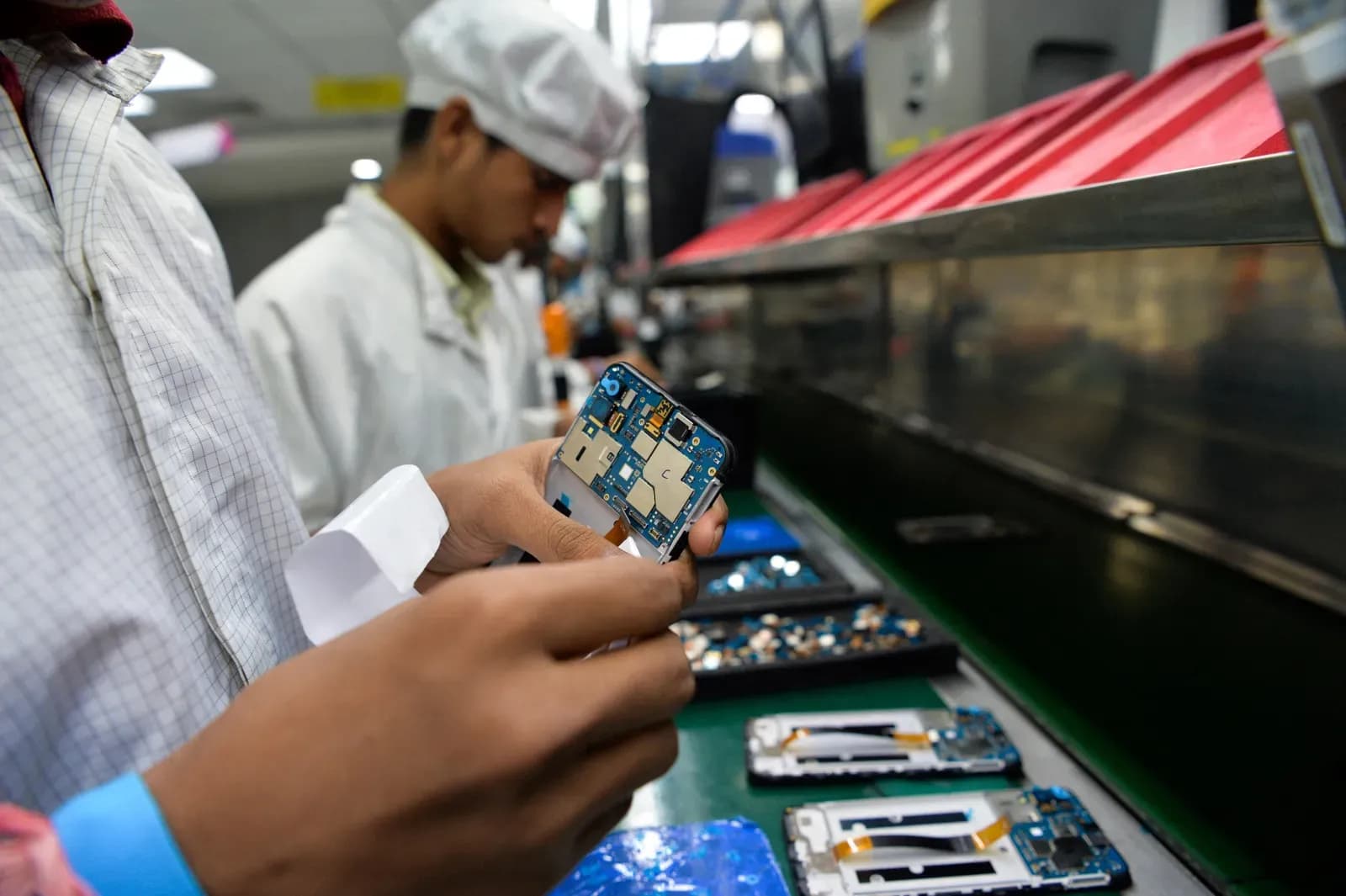
Smartphones continued to account for the largest share of India's electronic goods exports. Shipments increased 35.8%, from US$13.38 billion in April–September FY2025–26 to US$18.17 billion in the same period of FY2026–27.
However, their share of total electronic goods exports declined from 60.3% to 56.8%. This does not indicate a fall in smartphone exports. Instead, it reflects faster expansion in other electronics categories.
Non-smartphone electronics exports grew 56.5%, rising from US$8.81 billion to US$13.79 billion. Their share of total electronic goods exports consequently increased from 39.7% to 43.2%.
This shift matters because a broader export basket can make the industry less dependent on a single product category and create opportunities across different stages of electronics manufacturing.
Printed circuit boards and components drive diversification
One of the most notable developments has been the growth of exports in electronic components.
According to the Ministry of Commerce and Industry, exports of mounted printed circuit boards increased from US$63.3 million to US$2.10 billion during the April–September comparison period. Exports of populated printed circuit boards also rose from US$213.7 million to US$864.1 million.
Other segments recorded substantial increases. Exports of network transmission and routing equipment grew 98% to US$1.45 billion, while memory integrated circuit exports reached US$562.4 million.
These developments point towards a wider range of Indian-made electronics entering international markets. Printed circuit boards and communication equipment are important components of products used in telecommunications, computing, industrial systems and other technology applications.
However, higher export figures alone do not establish that all these products are manufactured entirely with domestic inputs. The extent of local value addition, component sourcing and technological ownership remains important when assessing the depth of India's manufacturing capabilities.
What is driving India's electronics export expansion?
Government initiatives to encourage domestic manufacturing have played an important role in expanding India's electronics production ecosystem. Production-linked incentive (PLI) support for large-scale electronics manufacturing, in particular, has encouraged investment in domestic production capacity.
The expansion of manufacturing facilities, integration into international supply chains and rising global demand for electronic products have also contributed to export growth.
India's growing role in smartphone production has helped establish manufacturing infrastructure, supplier networks and export channels. The next challenge is to extend these capabilities into components and other higher-value electronics segments.
The latest figures suggest that this diversification is gaining momentum. Nevertheless, sustained progress will require stronger domestic component manufacturing, research and development, skilled workers and reliable access to critical materials and technologies.
The global supply-chain opportunity
Global electronics manufacturing is shaped by complex supply chains, with different countries specialising in chip design, semiconductor fabrication, component production, assembly and final product exports.
India's expanding exports create an opportunity to become a more significant part of this ecosystem. The faster growth of non-smartphone electronics is particularly relevant because it indicates that export expansion is not limited to finished mobile devices.
The export destinations also reflect India's growing international trade links. The government has identified markets including Singapore, China, Hong Kong and Malaysia among the destinations for several electronics categories.
Yet competing with established manufacturing centres will require more than competitive production costs. Indian manufacturers must improve product quality, reliability, technological capabilities and the domestic availability of critical components.
The challenge: Moving from export growth to manufacturing depth
The 44% rise in electronics exports is an encouraging indicator of India's manufacturing momentum. But export growth should not be confused with complete self-reliance.
A country can export large volumes of finished electronics while continuing to import important components and technologies. Therefore, the next measure of progress should include domestic value addition, component manufacturing, research investment and the ability to develop advanced products within the country.
The increase in non-smartphone exports provides a positive signal, but maintaining this momentum will require a deeper manufacturing ecosystem.
India's electronics industry is no longer relying on smartphones alone to drive export growth. Whether this emerging diversification can translate into stronger domestic technological capabilities will determine how much value India captures from the global electronics market in the years ahead.