Opinion
RBI Governor Calls for MSME Expansion, Cites 31% Contribution to India's GDP
India's MSME sector contributes approximately 31% to the country's GDP, 35% of manufacturing output and nearly half of merchandise exports. Addressing the SME Finance and Investment Summit on 27 November 2026, RBI Governor Sanjay Malhotra highlighted the sector's importance in strengthening India's economic resilience. He emphasised the need for greater AI adoption, improved productivity, easier access to finance and expansion into international markets. With MSME bank credit growing by 27% year-on-year, the RBI Governor called for businesses to move beyond small-scale operations and become more technologically advanced and globally competitive.
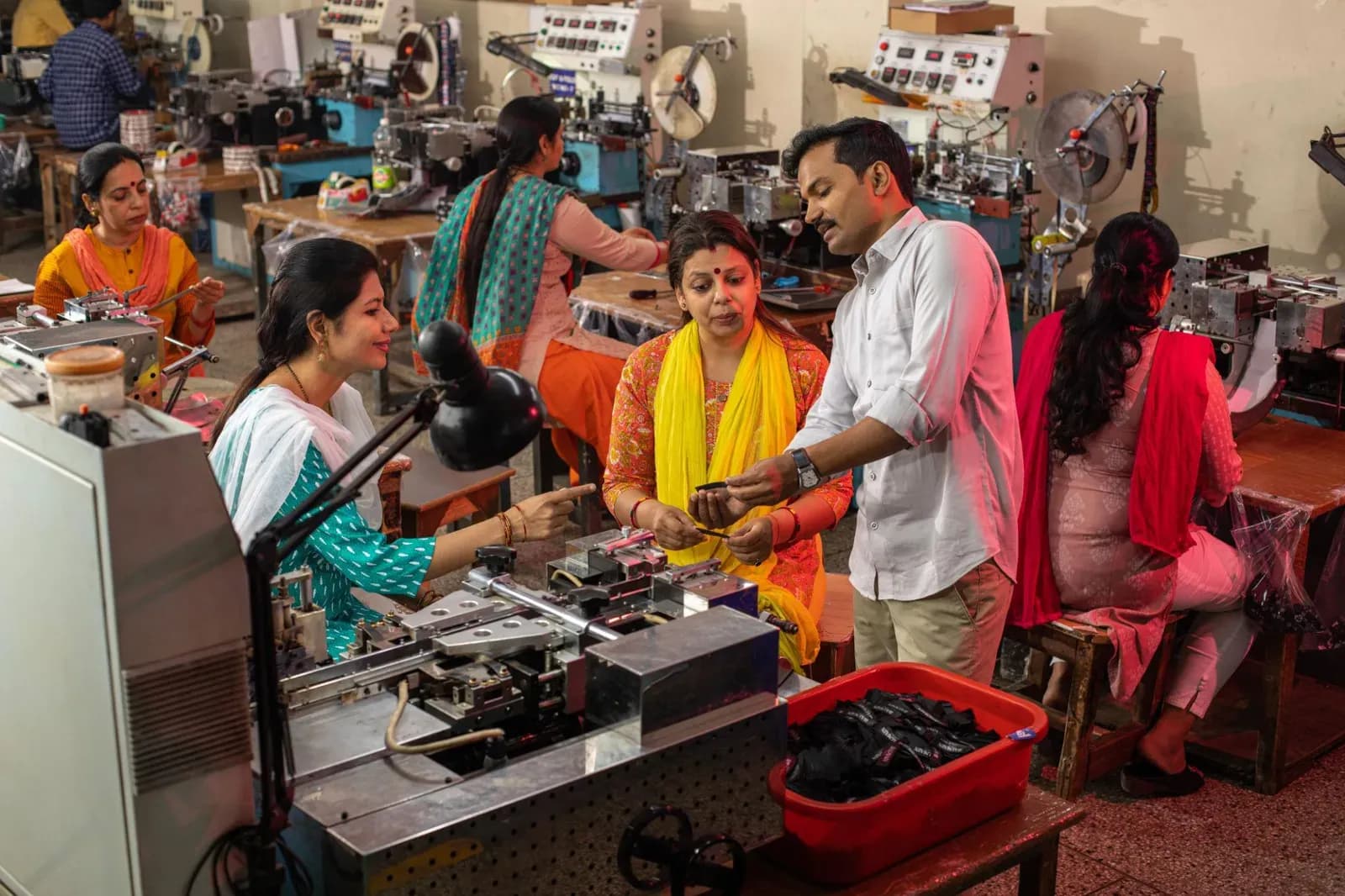
India's micro, small and medium enterprises (MSMEs) account for around 31% of GDP and nearly half of merchandise exports. RBI Governor Sanjay Malhotra has called for greater technology adoption, improved productivity and easier access to finance to help small businesses scale up and strengthen India's economic resilience.
India's ambition to become a developed economy will depend not only on the expansion of large corporations but also on the ability of its smaller businesses to grow, innovate and compete in global markets. Highlighting this, Reserve Bank of India (RBI) Governor Sanjay Malhotra has described micro, small and medium enterprises (MSMEs) as essential contributors to India's economic growth, employment generation and industrial competitiveness.
Addressing the SME Finance and Investment Summit on November 27, 2026, RBI Governor Malhotra emphasised that India's MSME sector has considerable untapped potential. He called for businesses to expand beyond their existing scale, improve productivity and adopt emerging technologies, particularly artificial intelligence (AI).
The RBI Governor's remarks come at a time when access to finance, technological transformation and integration with international markets are becoming increasingly important for India's small businesses.
MSMEs: A Major Pillar of India's Economic Growth
According to RBI Governor Malhotra, MSMEs contribute approximately 31% of India's GDP, account for 35% of manufacturing output and represent nearly half of the country's merchandise exports. The sector also provides livelihoods to more than 45 crore people, making it the second-largest employment provider after agriculture.
Their contribution extends beyond production and employment. Smaller enterprises operate as suppliers, manufacturers and service providers within larger industrial value chains. Their efficiency directly influences the competitiveness of bigger companies, while their presence in smaller towns and rural areas helps distribute economic opportunities more widely.
The sector also supports India's ambitions in emerging industries, including electronics, semiconductors, defence and clean energy. Growing demand for solar panels, inverters, batteries and related services could create further opportunities for smaller manufacturers and technology partners.
However, the RBI Governor noted that the country's MSME ecosystem must become more productive and competitive to fully capitalise on these opportunities.
AI Adoption Could Unlock Billions in Economic Value
One of the significant opportunities highlighted in the address was the potential of artificial intelligence to transform small businesses. RBI Governor Malhotra cited estimates suggesting that AI could generate between US$490 billion and US$685 billion in economic value for India's MSME sector. Yet, AI adoption across the sector remains limited, at approximately 15%.
The gap between potential and adoption highlights a major challenge for smaller enterprises. While large corporations increasingly invest in automation, advanced analytics and digital infrastructure, many smaller businesses continue to face financial and technological barriers.
The RBI Governor suggested that enterprises begin with practical applications such as digital accounting, inventory management, quality control and customer engagement. He also stressed that technology investment must be accompanied by workforce training, research and development, and professional management practices.
Improving productivity is particularly important. According to the estimates cited in the speech, the productivity of Indian MSMEs, measured by value added per worker, is around 26% of that of large enterprises. Bringing productivity closer to the level of leading firms in advanced economies could generate gains equivalent to 11% of India's GDP.
Credit Growth Improves, but Access Remains Uneven
Access to affordable and timely finance remains one of the biggest requirements for MSME expansion. Small businesses frequently face difficulties obtaining loans because of limited collateral, inadequate financial records and shorter credit histories.
The RBI has reported significant improvement in lending to the sector. Bank credit to MSMEs grew at a compound annual growth rate of approximately 19% between September 2021 and September 2026. In the 12 months ending September 2026, credit growth reached 27%, compared with 19.4% for overall bank credit.
Several regulatory measures have contributed to improving access to finance. From April 1, 2026, the RBI raised the collateral-free loan limit for micro and small enterprises from ₹10 lakh to ₹20 lakh. Banks may extend this limit to ₹25 lakh for businesses with a good repayment track record.
The central bank has also supported digital lending infrastructure. The Account Aggregator framework, which enables borrowers to share financial information securely with lenders, facilitated loans worth approximately ₹3.5 lakh crore during FY2025–26.
Another initiative, the Unified Lending Interface (ULI), aims to simplify credit assessments by bringing together information such as GST returns, bank statements, land records and utility data. This could help businesses with limited credit histories demonstrate their financial potential.
Despite these improvements, RBI Governor Malhotra acknowledged that the credit gap has not disappeared. Greater attention is needed to reach first-time borrowers, micro enterprises, women-led businesses and enterprises operating in smaller towns and rural areas.
Why Indian MSMEs Need to Scale Up
An important concern raised by the RBI Governor is that too many Indian businesses remain small even as they mature. Micro enterprises account for approximately 99% of all MSMEs in the country.
RBI Governor Malhotra encouraged entrepreneurs to overcome the hesitation associated with expanding beyond their existing business size. He also suggested that enterprises unable to achieve scale individually should explore industrial clusters, common facilities and partnerships with larger companies.
Another area requiring attention is international trade. Despite India's expanding network of free trade agreements (FTAs), only around 20–30% of eligible Indian exports utilise the lower tariffs available under these agreements, according to the figures cited by the RBI Governor. He urged businesses to understand the trade agreements relevant to their products, invest in quality standards and certifications, and explore international markets.
The Road Ahead: From Small Enterprises to Competitive Businesses
The RBI Governor's address highlights an important distinction: India's MSME challenge is no longer limited to increasing the number of small businesses or expanding credit availability. It is equally about helping existing enterprises become more productive, technologically capable and internationally competitive.
Government initiatives, improved lending infrastructure and digital public platforms can create favourable conditions, but businesses must also strengthen financial discipline, maintain proper accounts, adopt digital transactions and invest in innovation.
For India's broader economic ambitions, the next phase of MSME development will depend on whether smaller enterprises can move beyond survival and become sustainable, growth-oriented businesses.
As India pursues its Viksit Bharat vision, strengthening MSMEs could prove essential not only for employment and exports but also for building more resilient domestic supply chains and a competitive manufacturing ecosystem.
More to read
Economy
Beyond Smartphones: How India's Electronics Exports Are Expanding into a Bigger Global Market
Economy
India’s ₹11,000 Crore Push to Build Critical Machines: Can It Reduce Dependence on Foreign Equipment?
Economy